Engrained vs Ingrained: What’s the Difference? 2026
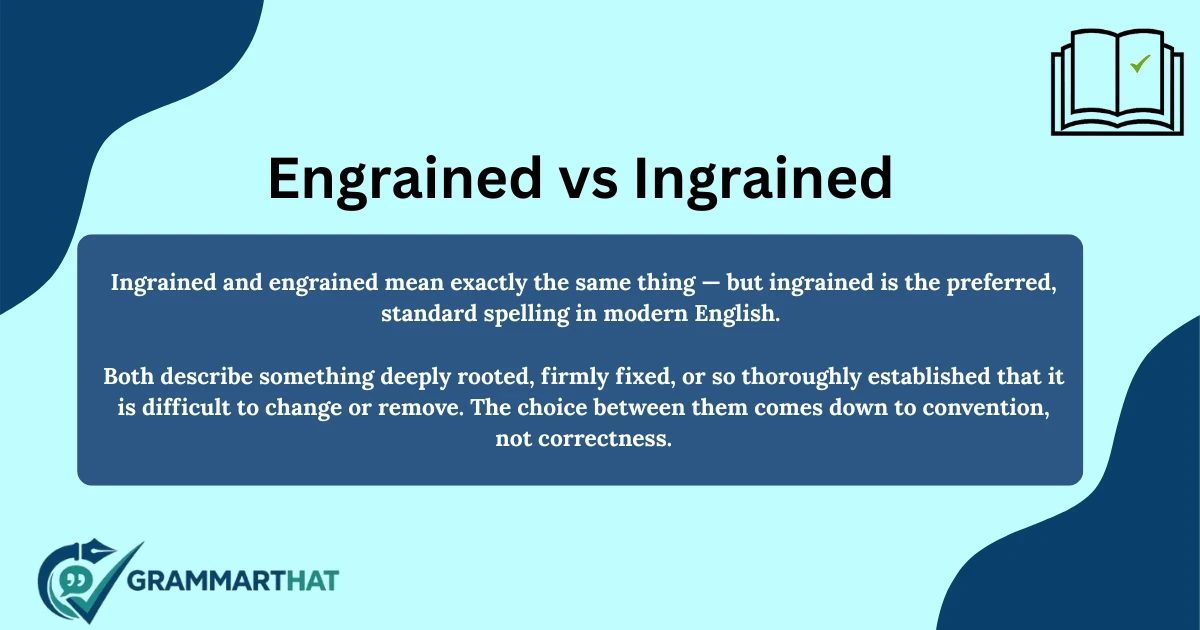
Ingrained and engrained mean exactly the same thing — but ingrained is the preferred, standard spelling in modern English. Both ...
Read moreDay Off vs Off Day: Meaning, Difference, and Correct Usage 2026
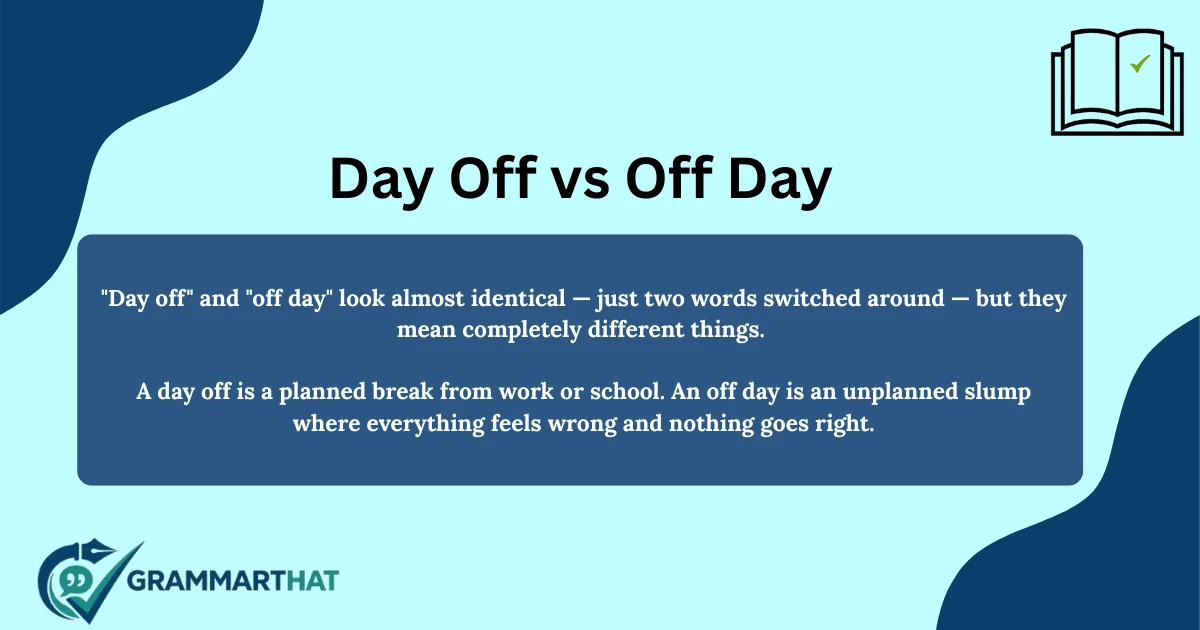
“Day off” and “off day” look almost identical — just two words switched around — but they mean completely different ...
Read moreSome of Whom or Some of Who: Which Is Correct? 2026
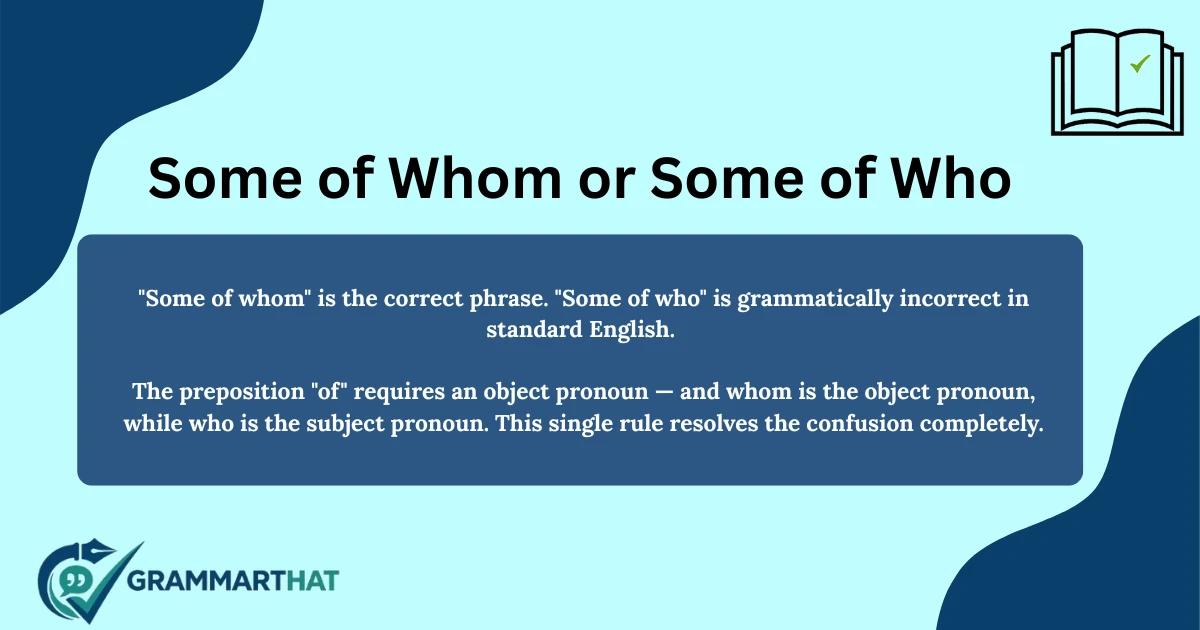
“Some of whom” is the correct phrase. “Some of who” is grammatically incorrect in standard English. The preposition “of” requires ...
Read moreAlright vs All Right: Meaning, Difference, and Correct Usage 2026
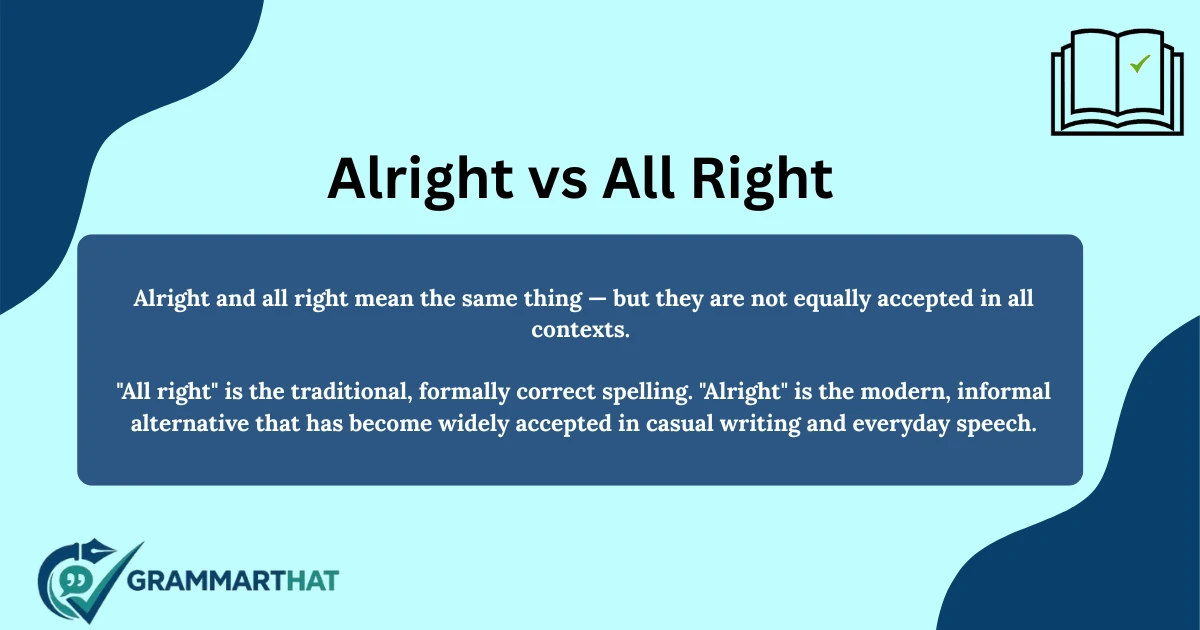
Alright and all right mean the same thing — but they are not equally accepted in all contexts. “All right” ...
Read moreImpatient vs Inpatient: Meaning, Difference and Usage 2026
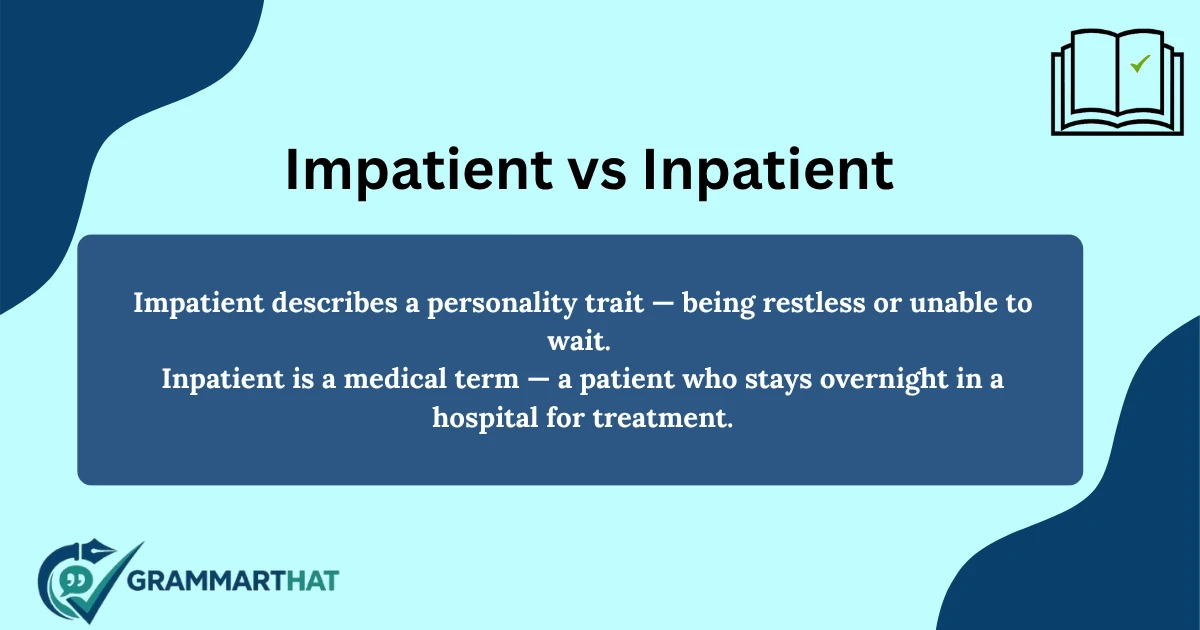
Impatient and inpatient look almost identical — just one letter apart — but they belong to completely different worlds. Impatient ...
Read moreHeard vs Herd vs Hurd: Meaning, Difference, and Usage 2026
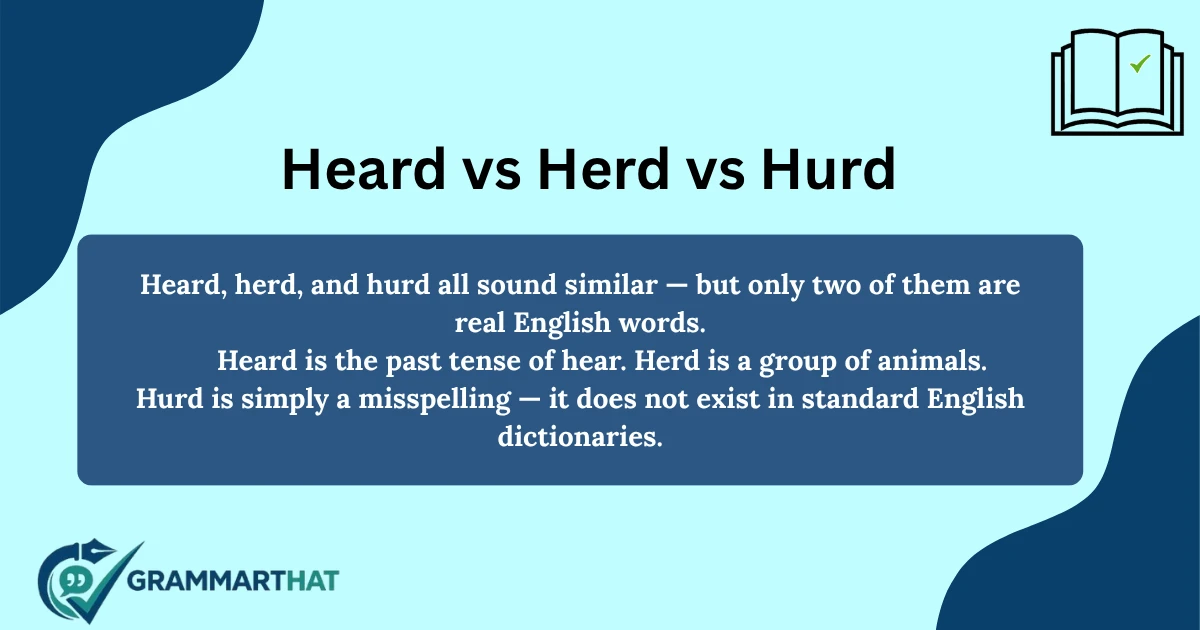
Heard, herd, and hurd all sound similar — but only two of them are real English words. Heard is the ...
Read moreEmasculate vs Demasculate: Meaning, Difference & Usage 2026
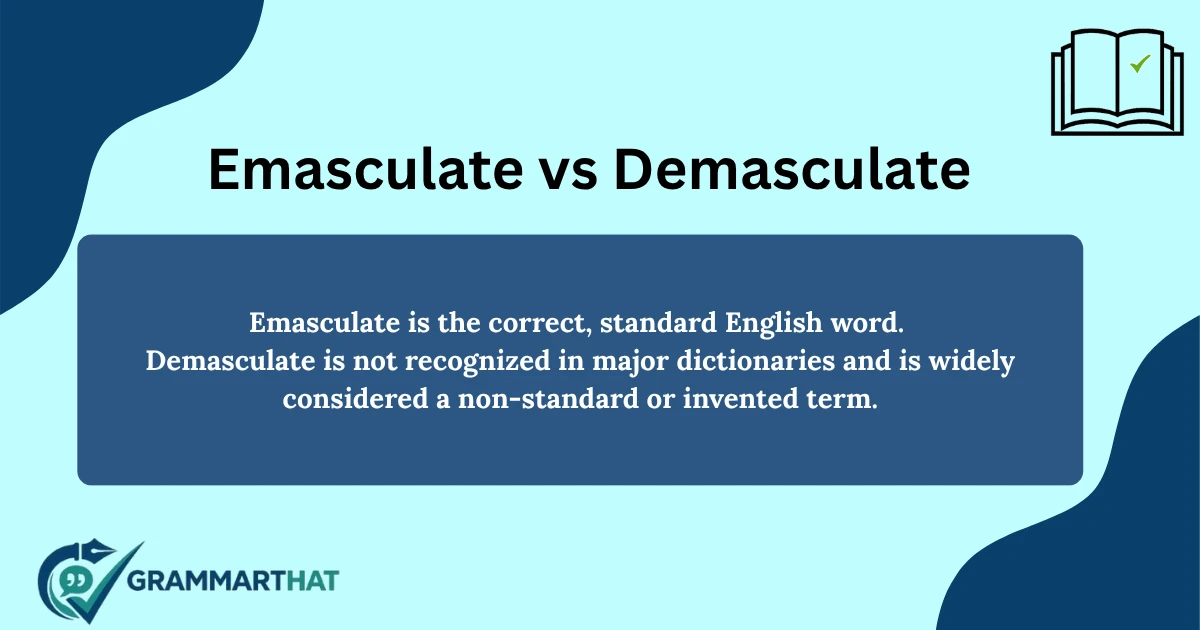
Emasculate is the correct, standard English word. Demasculate is not recognized in major dictionaries and is widely considered a non-standard ...
Read moreI Didn’t Do Nothing or I Didn’t Do Anything: Meaning & Usage 2026
“I didn’t do anything” is the correct, standard English phrase. “I didn’t do nothing” is a double negative — and ...
Read moreBy Which or In Which: Meaning, Difference, and Usage 2026
“By which” and “in which” are both relative phrases — but they answer completely different questions. “By which” explains the ...
Read moreTo Fast or Too Fast: Meaning, Difference, and Correct Usage 2026
“Too fast” is the correct phrase when describing excessive speed. “To fast” is only correct when fast is used as ...
Read more