“By which” and “in which” are both relative phrases — but they answer completely different questions.
“By which” explains the method or process used to do something. “In which” describes the place, time, or situation where something exists or happens.
This guide breaks down the difference between by which and in which, when to use each one, and how to avoid the most common mistakes.
What Does “By Which” Mean?
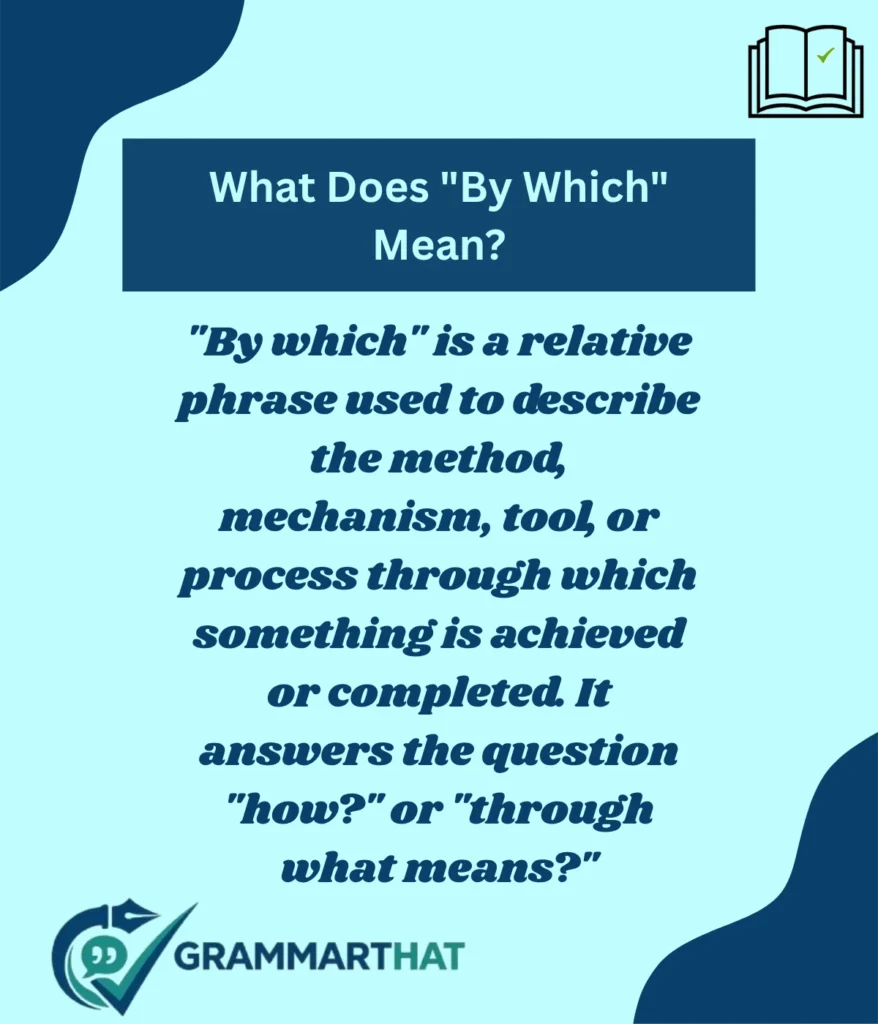
“By which” is a relative phrase used to describe the method, mechanism, tool, or process through which something is achieved or completed. It answers the question “how?” or “through what means?”
It is commonly used in formal, academic, and technical writing where precision about process or method matters.
Example: “The process by which the body converts food into energy is remarkably complex.”
Here, “by which” points directly to the mechanism — the how of the conversion process.
Synonyms for “by which”: whereby, through which, how, by means of which
Common uses:
- Describing scientific or biological processes
- Explaining legal or procedural mechanisms
- Defining methods in academic writing
- Clarifying the means through which a result is achieved
“By Which” in Different Contexts
Related structures:
- “The means by which…” — referring to tools or methods
- “The way by which…” — describing a process or path
- “The mechanism by which…” — used in scientific writing
What Does “In Which” Mean?
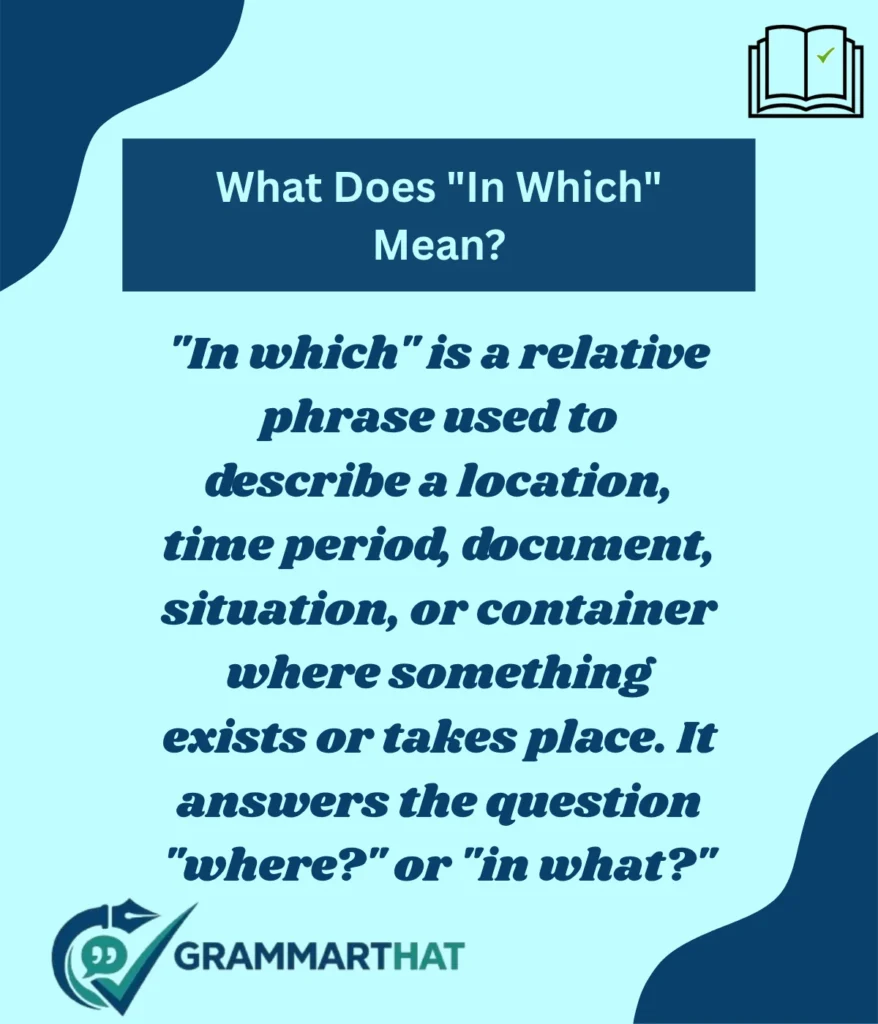
“In which” is a relative phrase used to describe a location, time period, document, situation, or container where something exists or takes place. It answers the question “where?” or “in what?”
It is a more formal alternative to simply using “where” — commonly preferred in academic, professional, and written English to avoid ending sentences with prepositions.
Example: “That was the era in which jazz music truly flourished.”
Here, “in which” points to the time period — the where or when of the flourishing.
Synonyms for “in which”: where, in that, within which, during which
Common uses:
- Referring to a place where something occurs
- Describing a time period when something happened
- Pointing to a document or text that contains something
- Identifying a situation or context where something exists
“In Which” in Different Contexts
Related structures:
- “The situation in which…” — describing a context or circumstance
- “The world in which…” — referring to an environment or setting
- “The document in which…” — pointing to written material
The Key Difference Between By Which vs In Which
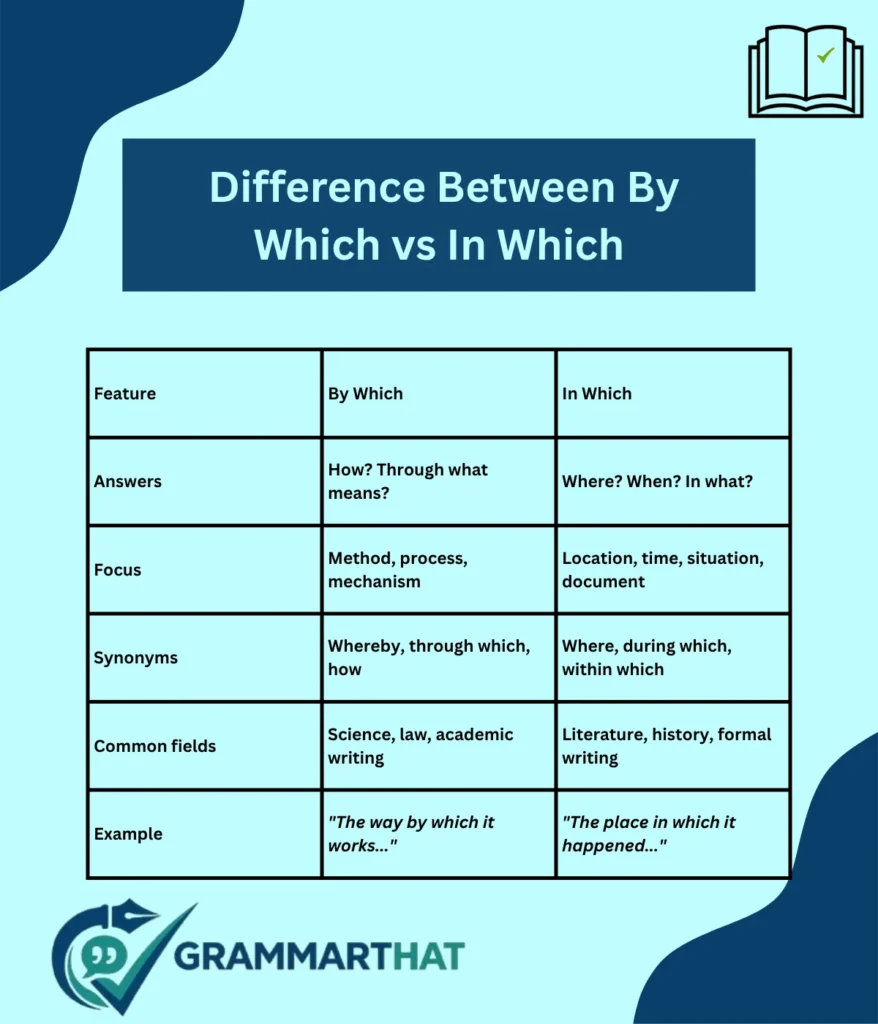
Method vs Location — That Is the Core Distinction
One phrase answers “how” — the other answers “where” or “when.”
“By which” = the mechanism or method — how something is done “In which” = the place, time, or context — where or when something happens
A Simple Test to Choose the Right One
Before writing either phrase, ask yourself one question:
“Am I describing HOW something is done — or WHERE/WHEN it exists?”
- If the answer is HOW → use by which
- If the answer is WHERE or WHEN → use in which
Examples of the test in action:
“The method ___ the disease spreads is airborne transmission.” → This describes how it spreads → by which ✅
“The country ___ she was born has changed significantly.” → This describes where she was born → in which ✅
When the Verb Guides Your Choice
The verb in your relative clause often tells you which phrase to use:
- Verbs that pair with “by” (achieved by, measured by, caused by) → use by which
- Verbs that pair with “in” (sit in, live in, contained in) → use in which
Verb Pairing with “By Which” & “In Which”
When to Use By Which vs In Which
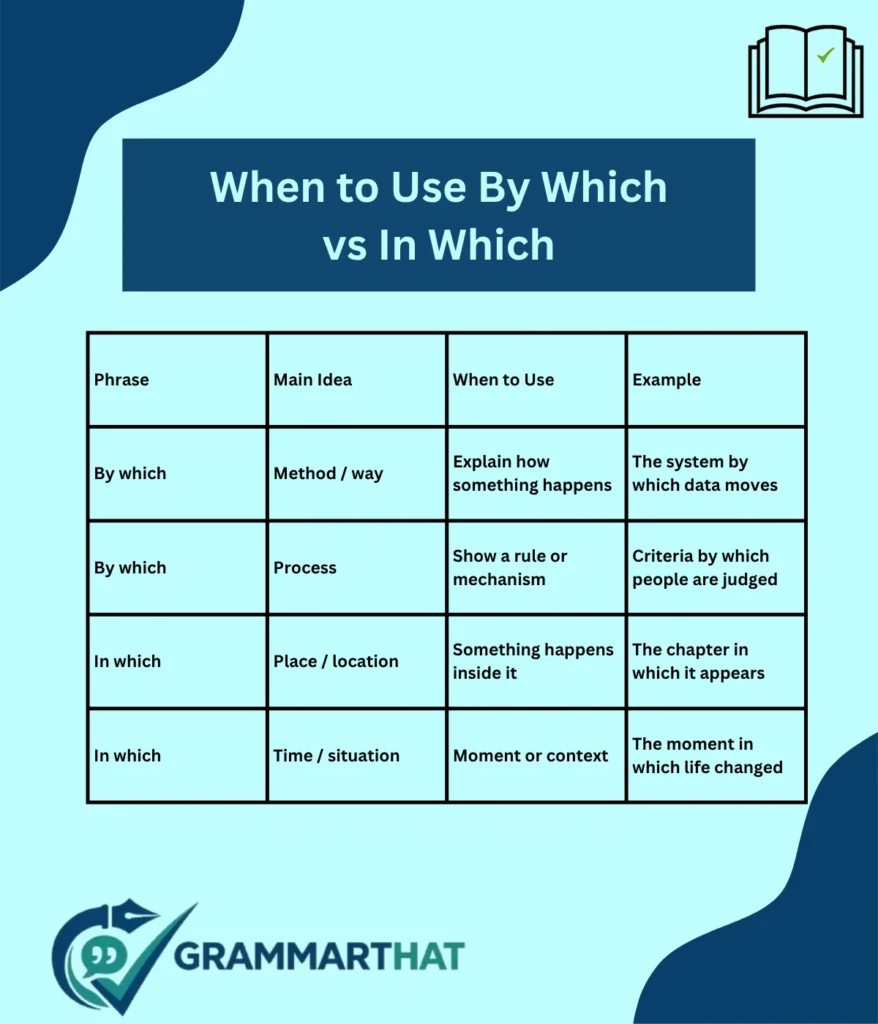
Use “By Which” When:
- Describing a process, method, or mechanism
- Explaining how something works or is accomplished
- Writing about scientific, legal, or procedural topics
- The relative clause involves means or cause
Examples:
- “The criteria by which candidates are evaluated are outlined below.”
- “This is the channel by which all complaints should be submitted.”
Use “In Which” When:
- Referring to a place, time period, or situation
- Identifying a document, chapter, or text that contains something
- Describing the context or environment where something occurs
- The relative clause involves location or containment
Examples:
- “The chapter in which this concept is introduced is particularly important.”
- “That was the moment in which everything changed.”
Common Mistakes to Avoid
Memory trick:
- By which → think “by means of” → process and method
- In which → think “inside which” → place and container
If you can replace the phrase with “whereby” — use by which. If you can replace it with “where” — use in which.
FAQs — By Which or In Which
How do you use by which in a sentence?
Use “by which” to describe a method or process. Example: “This is the system by which applications are reviewed and approved.”
What is the meaning of by which?
“By which” means “through what method or means.” It introduces a relative clause explaining the process or mechanism behind an action or result.
How to use the phrase “in which”?
Use “in which” to refer to a place, time, or context where something exists or occurs. Example: “The decade in which she grew up was full of rapid technological change.”
What’s another phrase for “in which”?
Common alternatives to “in which” include: where, during which, within which, in that, and inside which — depending on the context and level of formality required.
Conclusion
The difference between “by which” and “in which” is clear once you know what each one is pointing to. “By which” points to a method or process — it tells you how something is done. “In which” points to a location, time, or context — it tells you where or when something happens.
When you are unsure, apply the simple swap test. If “whereby” fits — use by which. If “where”* fits — use in which. Master this distinction and your formal writing will become sharper, more precise, and far more professional.

Hi, I’m the voice behind GrammarThat.com. I make grammar simple and easy to understand, from basic rules to advanced writing tips. Clear explanations. Practical examples. No confusion.