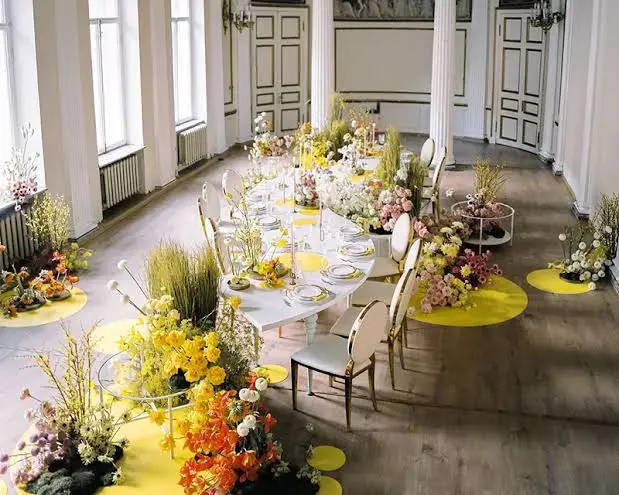
Here’s a simple question for anyone who sets up function rooms: when was the last time a guest walked in and said, “What an interesting layout”? For most events, the answer is never. Rows of identical round tables are practical, but they rarely create a sense of occasion.
Mixing rounds with serpentine tables is one of the easiest ways to change that. Curved serpentine sections can wrap around a dance floor, frame a stage or create flowing buffet and bar areas, while rounds keep seating sociable and familiar. Done well, the combination makes rooms feel designed rather than simply filled. Here’s how to plan it.
Understanding the Building Blocks
Most venues already own a mix of banquet tables, usually rounds and rectangular trestles. Serpentine tables are the less common piece. They’re curved sections, often shaped as a quarter or third of a ring, that can be joined together to form S-curves, crescents, circles or wave shapes.
Rounds come in a few standard sizes. Around 1500 millimetres comfortably seats eight, while 1800 millimetres seats ten, or up to twelve for a tighter fit. Larger sizes exist but make conversation across the table harder. Smaller rounds of around 1200 millimetres suit intimate dinners or cabaret-style conference sessions where people need to see a screen.
Serpentines are usually used for seating along one side, buffets, displays or bars. Some venues also use them as registration desks at conferences, where a curved front lets several staff greet guests at once without the bottleneck of a straight table. Because their curves can be arranged in different directions, a small set of serpentine pieces can create a surprising number of layouts.
Why Combine Them
The main benefit is flow. A room full of rounds creates a grid, and grids feel static. Introducing curves breaks that pattern and guides people naturally through the space.
Serpentines can also solve awkward rooms. Columns, odd corners and irregular walls can leave dead spots in a standard grid. A curved run of tables can hug those areas and turn wasted space into useful seating or service points.
There’s a practical advantage too. Serpentine buffets let more guests serve themselves at once, because the curved shape creates a longer front edge in the same footprint. That shortens queues and keeps the event moving.
Layout Idea 1: The Wrapped Dance Floor
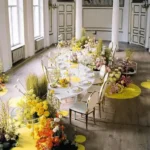
This layout works well for weddings and gala dinners. Place a curved line of serpentine tables in a crescent or semicircle around the dance floor, with guests seated on the outer side facing inward. Then fill the rest of the room with round banquet tables in staggered rows.
Staggering the rounds, rather than lining them up in neat rows, gives more guests a clear view between tables and makes the room feel less like a grid. Guests at the serpentines get a front-row view of speeches and dancing, while the rounds keep larger groups together for conversation. The curve also draws attention to the centre of the room, making the dance floor feel like the main event.
Layout Idea 2: Curved Feature Buffets and Softer Head Tables
For conferences and cocktail-style dinners, a serpentine buffet or bar can become the centrepiece. Run an S-curve through the middle of the room, with rounds placed on either side.
This approach separates the room into zones without walls, gives catering staff more serving space and creates natural paths for guests moving between food and tables. Add tall cocktail tables near the curve for people who prefer to stand. For networking events, this mix of seated rounds and standing space encourages people to move around rather than settling at one table all night.
The same thinking works for head tables. Traditional head tables are long and straight, which can make the people seated there feel on display. A gentle crescent of serpentine tables softens the look and lets everyone at the head table see each other.
Position rounds in a fan shape facing the crescent so guests have clear sightlines. This works especially well for awards nights and milestone birthdays.
Planning Tips for Mixed Layouts
Start with a scaled floor plan. Draw in fixed features first, such as doors, columns, the stage, bar and kitchen access, then add the dance floor or presentation area. Place serpentines next, since they shape the flow, and fill the remaining space with rounds.
Leave enough space between tables. Allow room for chairs to be pushed back, plus a clear walkway for staff carrying plates. A common rule of thumb is around 1.5 metres between the edges of neighbouring tables, though you may need more in high-traffic areas.
Keep emergency exits and paths clear, and check your layout against the venue’s maximum occupancy and any requirements from the local council or fire safety advisers.
Think about how the room will be used through the night as well. A layout that works for dinner may need to open up for dancing, so position serpentines where they won’t block movement once plates are cleared. Lighting can help too, with uplights or table candles following the curve to highlight its shape.
Consider linen and styling too. Serpentine tables need fitted or specially shaped cloths, so check that your linen supplier stocks them before committing to a design.
Choosing Tables That Make Mixing Easy
Flexible layouts depend on tables that are easy to move and store. Look for folding legs, lightweight tops and durable edges that resist chipping. Tables that share the same height make it easier to combine rounds, serpentines and rectangles in one room.
Turnkey Furniture is one Australian supplier with a range of commercial banquet tables, which can help venues build a mix of shapes that suits their rooms.
Small Changes, Big Impact
You don’t need a huge investment to change how a room feels. Adding a handful of serpentine tables to an existing stock of rounds opens up dozens of new layouts. Plan carefully, leave room to move and use curves to guide guests where you want them to go. The result is a space that looks considered from the moment people walk through the door.
Also Read
- https://grammarthat.com/beyond-bedside-care-finding-your-path-in-advanced-nursing
- https://grammarthat.com/how-to-post-a-travel-map-on-facebook-a-step-by-step-guide-for-2026/
- https://grammarthat.com/how-to-follow-an-audit-trail-from-a-customer-complaint-to-its-root-cause/