Commercial buildings require reliable heating, ventilation, and air conditioning systems to maintain comfortable indoor environments. However, these systems often consume substantial amounts of electricity, especially in large offices, shopping centers, hotels, and industrial facilities. As energy expenses continue to affect operating budgets, building owners must explore practical ways to improve HVAC efficiency.
Fortunately, businesses can improve system performance without always investing in complete equipment replacements. Modern controls, preventive maintenance, airflow improvements, and energy-efficient technologies can help reduce unnecessary energy consumption. Furthermore, these strategies can improve indoor comfort and support long-term building sustainability.
Nevertheless, successful HVAC optimization requires careful planning. Facility managers must understand their building’s cooling and heating demands, identify inefficient equipment, and implement improvements that deliver measurable results.
Understand How HVAC Systems Consume Energy
Before making improvements, facility managers should identify where their HVAC systems consume the most energy.
Commercial systems use electricity to operate compressors, fans, pumps, motors, and control equipment. Additionally, some facilities rely on natural gas or other fuels for heating.
When these components operate inefficiently, energy expenses increase.
For example, poorly maintained cooling coils reduce heat transfer, while blocked air filters restrict airflow. Similarly, incorrect thermostat settings can cause equipment to run unnecessarily.
Therefore, businesses should begin with an energy assessment.
An assessment helps identify excessive equipment runtime, inconsistent temperatures, inefficient operating schedules, and opportunities for improvement. Moreover, facility teams can use this information to prioritize upgrades according to expected savings and operational requirements.
Invest in High-Efficiency HVAC Equipment
Modern HVAC equipment provides greater control over heating and cooling output than many older systems.
For instance, variable-speed compressors can adjust their operating capacity according to actual cooling requirements. Instead of continuously switching between maximum output and complete shutdown, these systems can operate at lower speeds when demand decreases.
Consequently, they may reduce energy consumption while maintaining more consistent indoor temperatures.
Likewise, high-efficiency motors and advanced heat exchangers can improve overall equipment performance.
However, businesses should avoid replacing equipment without evaluating its condition. Facility managers should compare repair expenses, energy consumption, equipment age, and expected remaining service life.
A carefully planned replacement often provides greater value than purchasing equipment based solely on its advertised efficiency rating.
Optimize Temperature Settings With Smart Controls
Smart building controls offer one of the most practical opportunities to improve commercial HVAC efficiency.
Traditional thermostats often maintain fixed temperatures regardless of occupancy. In contrast, connected control systems can adjust heating and cooling according to building schedules, outdoor conditions, and occupancy patterns.
For example, an office building may require full cooling during working hours but significantly less conditioning overnight.
By automatically adjusting operating schedules, facility teams can avoid wasting energy in unoccupied spaces.
Furthermore, modern building automation systems can coordinate HVAC equipment with lighting and other building operations.
As a result, managers gain greater visibility into energy consumption and can make more informed operational decisions.
Maintain Equipment Before Problems Develop
Regular maintenance remains essential for efficient HVAC operation.
Even advanced systems lose performance when filters become clogged, coils accumulate dirt, or mechanical components experience excessive wear.
Therefore, facility managers should create a structured preventive maintenance schedule.
Technicians should inspect air filters, electrical connections, refrigerant circuits, drainage systems, motors, belts, and thermostats. Additionally, they should check airflow, inspect unusual vibrations, and evaluate overall equipment performance.
The ENERGY STAR operation and maintenance guidelines emphasize proper equipment calibration, efficient operating schedules, and regular performance checks.
These practices help organizations identify developing problems before they cause major equipment failures.
Moreover, preventive maintenance can reduce unexpected interruptions and support a longer equipment service life.
Improve Airflow Throughout the Building
Efficient heating and cooling depend on proper airflow distribution.
When ductwork leaks or supply vents become obstructed, HVAC systems struggle to deliver conditioned air effectively.
Consequently, certain rooms may become uncomfortable while equipment operates longer to compensate.
Facility teams should inspect duct connections, remove airflow obstructions, and verify that supply and return vents remain accessible.
Additionally, technicians should evaluate duct insulation and airflow balance.
Proper balancing ensures that different areas receive suitable amounts of conditioned air.
However, managers should avoid making major ductwork modifications without professional guidance. Incorrect adjustments can create pressure imbalances and reduce system performance.
Introduce Zoning for Different Occupancy Needs
Commercial properties often contain areas with different heating and cooling requirements.
For example, conference rooms, computer rooms, reception areas, and storage facilities rarely experience identical temperature demands.
Zoning allows building managers to control these spaces independently.
Instead of conditioning the entire building uniformly, a properly designed zoning system directs heating or cooling toward areas that actually need it.
Furthermore, occupancy sensors can help reduce energy consumption in temporarily unused rooms.
Nevertheless, zoning requires appropriate equipment and careful design. Technicians must consider duct capacity, pressure control, ventilation requirements, and temperature differences.
When implemented correctly, zoning can improve occupant comfort and reduce unnecessary system operation.
Explore Energy Recovery Ventilation
Commercial ventilation systems regularly introduce outdoor air while exhausting indoor air.
Although ventilation supports indoor air quality, conditioning incoming outdoor air requires additional energy.
Energy recovery ventilation provides a useful solution.
These systems transfer some heat between outgoing and incoming air streams without intentionally mixing them.
During warm weather, energy recovery can reduce the cooling load associated with incoming ventilation air. Similarly, during colder conditions, it can recover heat from outgoing indoor air.
Consequently, heating and cooling equipment may require less energy to maintain comfortable conditions.
However, savings depend on climate, ventilation demand, equipment selection, and operating schedules.
Therefore, facility managers should evaluate energy recovery opportunities during system upgrades or major renovations.
Strengthen Building Insulation and Air Sealing
Building conditions directly influence HVAC energy consumption.
Poorly insulated roofs, leaking windows, damaged door seals, and gaps around wall penetrations allow unwanted heat transfer.
As a result, HVAC equipment must work harder to maintain suitable indoor temperatures.
Businesses can reduce these losses by repairing weather stripping, sealing air leaks, and improving insulation.
Additionally, managers should inspect loading entrances and frequently opened exterior doors.
The ENERGY STAR energy-saving checklist highlights practical measures such as sealing air leaks, maintaining heating and cooling equipment, and improving insulation.
These improvements can reduce heating and cooling demand without requiring immediate equipment replacement.
Monitor Energy Consumption With Digital Tools
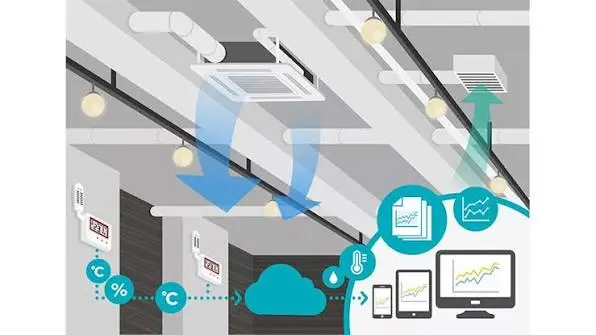
Modern energy management platforms allow facility managers to analyze HVAC performance more accurately.
These systems collect information about electricity consumption, operating hours, temperatures, equipment faults, and other performance indicators.
However, collecting data alone does not improve efficiency.
Managers must review the information regularly and investigate unusual patterns.
For instance, energy reports may reveal that cooling equipment continues operating after business hours. Alternatively, excessive compressor runtime may indicate maintenance problems or incorrect control settings.
By identifying these issues early, facilities can implement targeted improvements.
Moreover, performance monitoring helps businesses compare operating conditions before and after equipment upgrades.
Balance Energy Savings With Indoor Air Quality
Although reducing energy consumption remains important, businesses must also maintain healthy indoor environments.
Insufficient ventilation can allow indoor pollutants to accumulate. Likewise, poorly maintained filtration systems may contribute to uncomfortable indoor conditions.
Therefore, facility managers should avoid reducing ventilation simply to lower electricity bills.
Instead, they should optimize ventilation according to building requirements and occupancy.
The EPA’s indoor air quality guidance explains the importance of ventilation design, building operation, and appropriate maintenance.
Furthermore, facilities should control indoor moisture, maintain suitable filtration, and investigate persistent air quality complaints.
An effective HVAC strategy should support both energy efficiency and occupant well-being.
Develop a Long-Term HVAC Improvement Plan
Businesses often achieve better results when they approach efficiency improvements systematically.
Rather than replacing multiple systems immediately, managers can prioritize projects according to cost, urgency, and potential benefits.
A practical improvement plan may include:
- Conducting regular energy assessments.
- Updating inefficient operating schedules.
- Maintaining filters, coils, and mechanical components.
- Installing smart controls and occupancy sensors.
- Repairing duct leakage and improving insulation.
- Considering variable-speed equipment during replacements.
- Monitoring energy use and investigating unusual changes.
- Training maintenance employees on system controls.
Additionally, facility managers should establish measurable performance targets and review progress periodically.
This approach allows businesses to distribute investment costs while continuously improving operational performance.
Prepare for the Future of Commercial HVAC Technology
Commercial HVAC technology continues to evolve as manufacturers develop more connected and efficient systems.
Advanced heat pumps, intelligent sensors, predictive maintenance software, and automated energy management platforms offer new opportunities for building optimization.
For example, predictive software can analyze equipment behavior and identify patterns associated with developing mechanical problems.
Similarly, intelligent controls can adjust operation as occupancy and outdoor conditions change.
Nevertheless, technology cannot replace proper installation, commissioning, and maintenance.
Businesses must ensure that employees understand system capabilities and that technicians regularly verify equipment performance.
By combining modern technology with effective building management, organizations can create more reliable and adaptable HVAC operations.
Conclusion
Improving commercial HVAC efficiency requires a combination of smart technology, preventive maintenance, proper airflow management, and strategic investment.
Businesses can reduce unnecessary energy consumption by optimizing equipment schedules, upgrading inefficient components, improving building insulation, and monitoring system performance.
Furthermore, energy recovery, zoning, and intelligent controls can improve indoor comfort while supporting operational sustainability.
Most importantly, facility managers should view HVAC efficiency as an ongoing responsibility rather than a one-time project.
With consistent maintenance, thoughtful planning, and data-driven decisions, commercial buildings can control energy expenses, improve equipment reliability, and create comfortable indoor environments for years to come.
Also Read
- XD Meaning in Text: Usage, Examples & More
- Awoke vs. Woke: The Real Difference 2026
- FML is one of the most dramatically expressive abbreviations in casual texting — equal parts frustration and self-aware humor. FML stands for “F*** My Life” — a hyperbolic