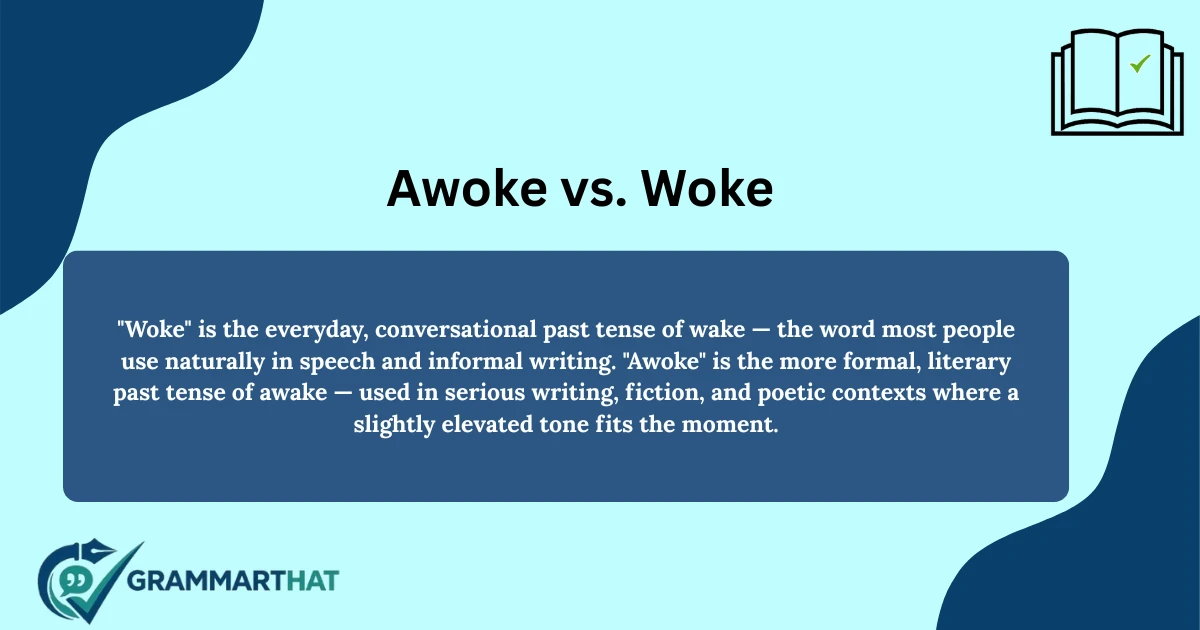
“Woke” is the common past tense of wake, while “awoke” is a more formal and literary alternative. Both are correct and describe the same action, but woke is more common in everyday use.
Both are grammatically correct. The difference is tone, register, and which verb each one belongs to.
What Does “Woke” Mean?

“Woke” is the simple past tense of the verb “wake” — one of the most commonly used verbs in the English language. It describes the act of coming out of sleep or causing someone else to come out of sleep — in the past tense.
Example: “I woke up at six in the morning and immediately reached for my phone.”
Common uses of “woke” in everyday writing:
- “She woke up to find the house completely silent.”
- “He woke his roommate by accident when he came home late.”
“Woke” in Different Everyday Contexts
In everyday American English, “woke” — especially “woke up” — is the natural, default past tense choice for almost every context involving coming out of sleep.
What Does “Awoke” Mean?

“Awoke” is the simple past tense of the verb “awake” — a slightly more formal and literary cousin of wake. It carries the same core meaning — coming out of sleep — but with a noticeably more elevated, deliberate, and poetic tone.
Example: “She awoke to the sound of rain against the window and lay still for a long moment.”
Common uses of “awoke” in formal and literary writing:
- “He awoke in a cold sweat, the dream still vivid behind his eyes.”
- “She awoke to the realization that everything she had believed was wrong.”
“Awoke” in Different Formal and Literary Contexts
In formal, literary, and elevated writing contexts — “awoke” delivers a level of seriousness and intentionality that “woke” simply cannot match.
Awoke vs. Woke — Key Differences That Actually Matter
The difference between “woke” and “awoke” is not regional like mold/mould or cancelled/canceled. It is a difference of verb origin, tone, and register — and in certain grammatical constructions, only one of them works correctly.
The Two Verbs — Wake and Awake
This matters because the past participle forms are also different — and confusing them produces grammatical errors in perfect tenses.
Correct: “She had awoken to a strange sound in the middle of the night.”
Incorrect: ~~”She has awoke at dawn.”~~ — “Awoke” is simple past — not a past participle. The past participle of awake is “awoken.”
Tone and Register — When Each Word Fits
The Figurative Use — Both Words Extend Beyond Sleep
Both “woke” and “awoke” can be used figuratively — describing the moment someone becomes aware of something important. But the figurative uses carry different weights.
“Woke” in figurative use tends to be direct and modern: “The accident woke him to how fragile life is.”
“Awoke” in figurative use carries more literary gravitas: “The documentary awoke in her a passion for environmental justice she had never felt before.”
Same figurative meaning — dramatically different tone.
Woke vs. Awoke in Real Sentences
“Woke” in Everyday and Conversational Writing
- “I woke up late and missed the first half of the meeting entirely.”
- “The thunder woke the entire house at two in the morning.”
“Awoke” in Formal and Literary Writing
- “She awoke to the sound of church bells and lay still, counting them.”
- “She awoke to a realization she had been avoiding for months.”
Same Meaning, Different Register — How the Choice Shapes the Writing
Casual: “I woke up in the middle of the night and could not get back to sleep.”
Literary: “She awoke in the darkness — heart racing, the dream still close.”
Same experience. Same moment of waking in the night. But the casual version belongs in a text message or a blog post — and the literary version belongs in a novel. The verb alone does much of that work.
Frequently Asked Questions
Do you say woke or awoke?
Both are correct — but “woke” (or “woke up”) is the natural choice in everyday speech and informal writing. “Awoke” belongs in formal, literary, or poetic writing where a more elevated tone is appropriate. In casual conversation, saying “I awoke at seven” sounds stiff and slightly old-fashioned.
What is the difference between woke and wake?
“Wake” is the base form of the verb — the infinitive. “Woke” is its simple past tense. “I wake up early every day” (present) versus “I woke up early yesterday” (past). They are different tense forms of the same verb — not two different words.
How do you use the word awoke?
Use “awoke” as the simple past tense of the verb awake — in formal, literary, or elevated writing contexts. “She awoke to the sound of rain
Is the word woke grammatically correct?
Yes — completely. “Woke” is the standard, fully correct simple past tense of the verb wake in both American and British English.
Conclusion
“Woke” and “awoke” both describe the act of coming out of sleep in the past — but they belong to different verbs, carry different tones, and work in different contexts. Use “woke up” in everyday speech, casual writing, and anywhere a natural, modern tone fits. Use “awoke” in literary fiction, formal essays, and elevated writing where the weight of the moment deserves a more deliberate word.

Hi, I’m the voice behind GrammarThat.com. I make grammar simple and easy to understand, from basic rules to advanced writing tips. Clear explanations. Practical examples. No confusion.