Immediate Actions and Evidence Collection in Personal Injury Claims
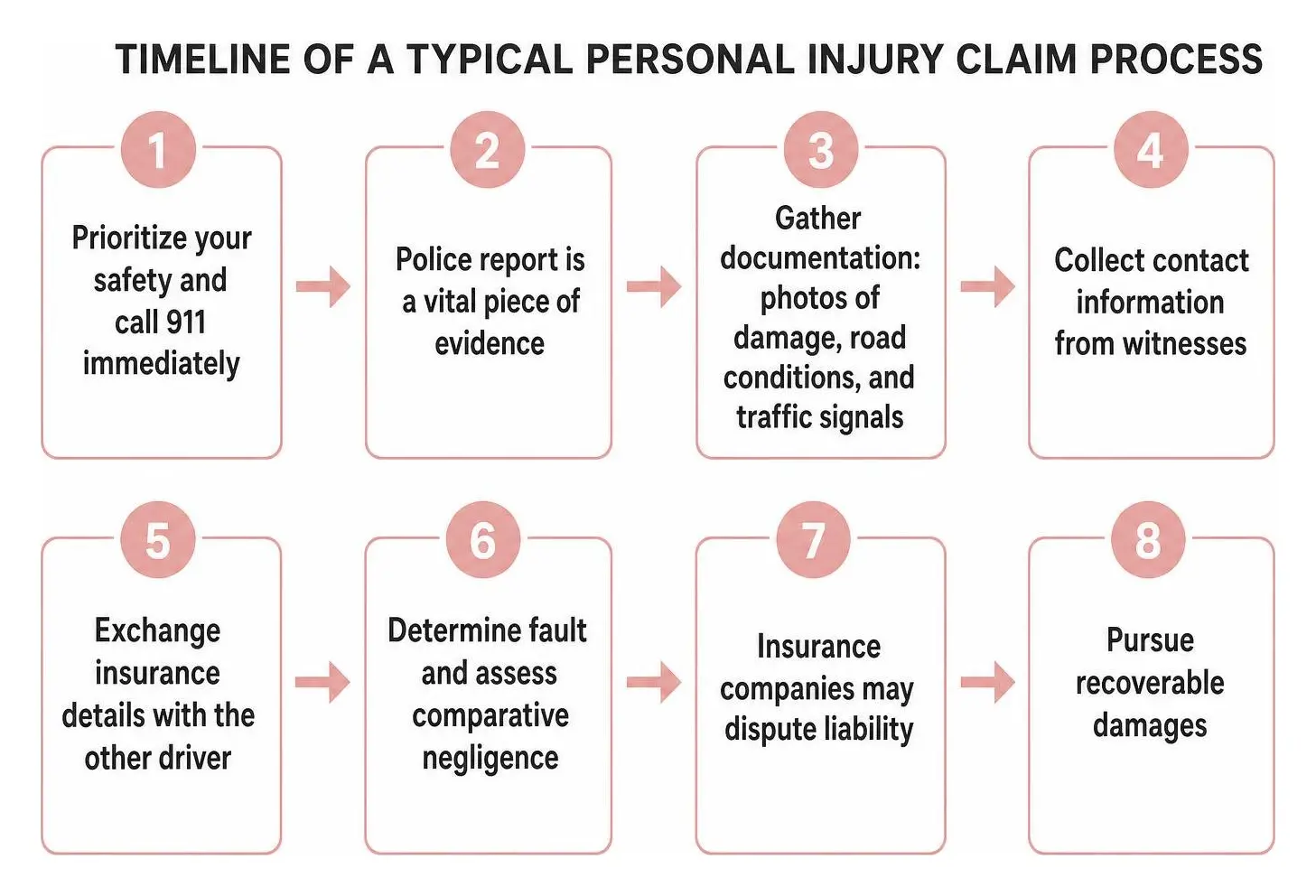
The moments following a collision are critical. To protect your legal rights, prioritize your safety and call 911 immediately. In Pennsylvania, a police report is a vital piece of evidence that provides an objective account of the incident. While at the scene, gather as much documentation as possible: take photographs of vehicle damage, road conditions, and any traffic signals. Collect contact information from witnesses and exchange insurance details with the other driver.
Determining Fault and Comparative Negligence in Personal Injury Claims
Pennsylvania operates under a “modified comparative negligence” rule. This means that if you are found to be partially at fault for an accident, your compensation will be reduced by your percentage of blame. However, if you are found to be more than 50% responsible, you are barred from recovering any damages. In complex multi-vehicle accidents, liability is often disputed. Insurance companies may use accident reconstruction experts to shift blame away from their policyholders. Having a clear, evidence-based narrative is essential to defending your position.
Understanding Insurance Frameworks and Recoverable Damages
Pennsylvania’s insurance laws are unique due to the choice between “limited tort” and “full tort” coverage. Limited tort restricts your ability to sue for non-economic damages, such as pain and suffering, unless your injuries are deemed “serious.” Full tort allows you to seek compensation for all damages regardless of injury severity.
When calculating your claim, we look at two primary categories:
- Economic Damages: These are quantifiable losses, including current and future medical bills, rehabilitation costs, and lost wages.
- Non-Economic Damages: These cover the intangible impact of the accident, such as emotional distress, loss of enjoyment of life, and physical pain.
Strategic Negotiation and Legal Representation
Insurance adjusters are trained to protect corporate profits, often by offering quick, low-value settlements before the full extent of your injuries is known. They may ask for a recorded statement, which can later be used to undermine your claim.
When you work with a dedicated personal injury law firm, you shift the dynamic. Experienced counsel understands how to handle adjusters, gather medical evidence that proves the severity of your injuries, and prepare your case for trial if a fair settlement cannot be reached through negotiation. This leverage is often the difference between a minor payout and a settlement that truly covers your long-term needs.
Frequently Asked Questions About Personal Injury Claims
What is the statute of limitations for filing an injury claim in Pennsylvania?
In Pennsylvania, you generally have two years from the date of the accident to file a lawsuit. If you miss this deadline, you typically forfeit your right to pursue compensation in court.
How does partial fault affect final compensation?
If you are 20% at fault, your total settlement will be reduced by 20%. If you are 51% or more at fault, you cannot recover damages from the other party.
How do insurance adjusters attempt to undervalue claims?
Adjusters often point to pre-existing medical conditions to argue that your current pain is not related to the accident. They may also pressure you to sign a release of claims in exchange for a small, immediate payment. Never sign these documents without legal counsel.
Conclusion
Maximizing your settlement requires a combination of timely action, thorough documentation, and strategic advocacy. Whether you are dealing with minor property damage or life-altering injuries, the complexity of Philadelphia’s legal landscape demands careful attention. By securing the right support early, you can ensure that your rights are protected and that you are positioned to receive the full compensation you are entitled to under the law.
Also Read
- Innate vs. Enate Homophones: Spelling & Definition
- NSFW Meaning in Text: Usage, Examples & More
- Inclosed vs Enclosed: What’s the Real Difference?