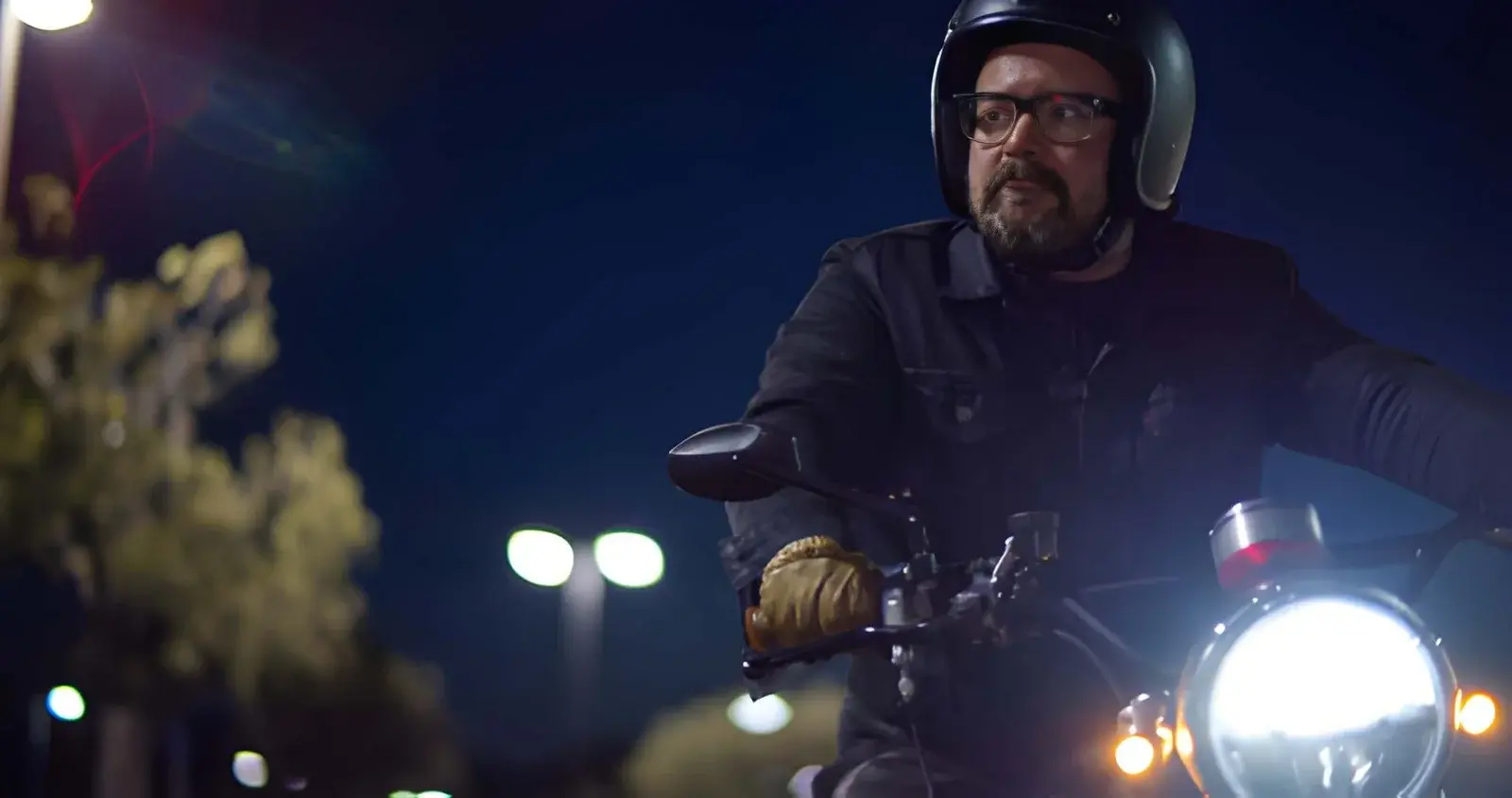
Every ride carries some risk, but the danger grows once the sun goes down. Lower visibility affects riders and drivers alike, and that combination makes night rides far riskier than daytime ones.
Crashes after dark are also often misunderstood. Riders are sometimes blamed for recklessness when the real issue was poor visibility. Fortunately, a few smart habits can lower your risk. For a deeper look, check out these motorcycle tips when riding at night.
Why Nighttime Riding Is More Dangerous
Nearly half of all motorcycle fatalities happen after dark. Drivers struggle to spot a single headlight in the dark, and riders have a harder time seeing potholes, debris, and animals.
That is why a defensive mindset matters so much at night. The habits below can help.
Smart Riding Habits After Dark
Keep Extra Space Ahead
Poor visibility shortens your reaction time. Try to keep at least three seconds between your bike and the vehicle in front of you.
That cushion gives you room to brake smoothly if traffic stops suddenly.
Watch for Wildlife
Deer, squirrels, and other animals are more active at night. They often cross roads while searching for food or water.
Even a small animal can cause a serious crash on two wheels. Scan the roadside constantly for movement.
Reduce Your Speed
Motorcyclists have less protection than other drivers, so speed matters even more in low light. This applies on familiar roads too.
Slower speeds give you extra time to react to animals, impaired drivers, or sudden braking.
Use the Vehicle Ahead as a Guide
Following another vehicle can help you at night. Bouncing taillights often signal rough pavement ahead.
Its headlights also light up the road surface, which can help you spot hazards sooner, especially in bad weather.
Manage Oncoming Glare
Staring into oncoming headlights can briefly blind you. Look toward the right lane line instead, which keeps you oriented without the glare.
Avoid fixating on the pavement right in front of your front wheel, since that can hurt your steering control.
Expect Tired and Impaired Drivers
Fatigue, distraction, and impairment are more common late at night. Lighter traffic can also tempt some drivers to speed.
Keep scanning mirrors, intersections, and side streets so you are never caught off guard.
Choose Your Lane Position Wisely
Riding closer to the center line, rather than hugging the edge of the road, can make you easier to see. Use lane markings to stay oriented if glare affects your vision.
Get Your Motorcycle and Gear Ready
Preparation before you start the engine can make a big difference once you are on the road.
Upgrade Your Lighting
Factory lighting is not always enough after dark. A few upgrades can help:
- HID headlight kits deliver brighter, more focused light than standard halogen bulbs.
- LED headlight kits last longer, use less energy, and give you a crisp beam.
- Auxiliary lights such as fog or driving lights widen your field of view and ease eye strain on long rides.
- Brake light flashers pulse when you brake, which grabs attention faster and may help prevent rear-end collisions.
Make Yourself Easy to See
Your gear should protect you and help other drivers notice you. Bright or fluorescent clothing with reflective piping stands out after dark.
Adding reflective tape to your helmet, jacket, and motorcycle boosts your visibility even more.
Adjust to Changing Conditions
Motorcyclists face a much higher fatality risk than people in other vehicles, and night riding widens that gap. Fog, low light, and impaired drivers all add to the danger.
Slow down, leave extra space, and use extra caution at intersections. In fog, low beams or fog lights can help, especially when paired with reflective gear.
Your environment matters too. City streets bring heavy traffic and pedestrians, while rural roads bring wildlife and debris. Match your speed and following distance to where you are riding.
Before you head out, check that every light works and check the forecast for fog or rain. Wear a reflective jacket and use a clear visor.
When Another Driver Causes a Crash
Even the most careful rider can be hurt by someone else’s mistake. Recovering from injuries while dealing with insurers can feel overwhelming.
An experienced attorney knows how insurance companies evaluate motorcycle claims and which evidence strengthens a case. A skilled motorcycle accident lawyer can investigate the crash, collect documentation, and negotiate on your behalf. They can also challenge the unfair assumption that riders are to blame.
If you or someone you love was injured in a motorcycle crash, speaking with a personal injury attorney can help you protect your rights. To find help near you, browse the available office locations and take the first step toward recovery.
Also Read
- https://grammarthat.com/impatient-vs-inpatient/
https://grammarthat.com/custom-hot-dog-boxes-for-food-brands-that-sell-more/
https://grammarthat.com/how-to-handle-missing-outdated-or-broken-drivers-on-windows/