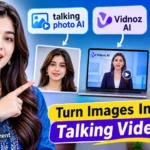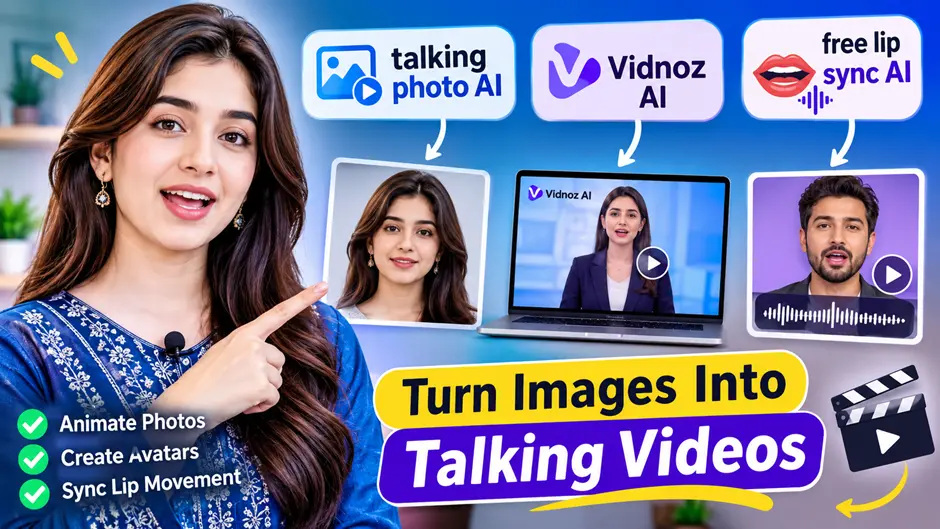
Creating a video no longer always begins with a camera recording. A suitable portrait, a written message, and an audio recording can now provide the starting material for an animated presentation. This approach is useful for people who want to produce digital characters, educational clips, or short promotional videos without arranging a complete filming setup. Different AI tools handle different parts of this process, including facial animation, voice generation, and mouth synchronization.
Give a Static Picture a Speaking Role With talking photo AI
Think about an old portrait that you would like to use in a short video. Normally, you would need an actor, a recording session, and some editing to turn that idea into a presentation. A talking photo AI tool provides another route by generating facial movements that follow supplied speech.
The process usually begins with selecting a photograph that clearly shows the face. You can then provide a written script or an existing voice recording, depending on the tool. The software analyzes the facial features and generates movements intended to match the dialogue.
This technique can be useful for digital storytelling, online lessons, product introductions, and entertaining social media content. It also gives creators an opportunity to experiment with different voices and languages without recording every version themselves.
Source material makes a considerable difference. A portrait with a visible face, balanced lighting, and an unobstructed mouth is generally a better choice than an image taken from an unusual angle.
Exploring the Creative Tools Available in Vidnoz AI
Vidnoz AI offers a browser-based environment for producing talking avatars and other AI-generated video content. Its talking photo feature allows users to upload a portrait, enter a script, select speech settings, and generate an animated video.
One useful aspect is the ability to experiment with different voices and language options. This can help creators prepare alternative presentations for audiences who speak different languages. The platform also provides options for adjusting avatar appearance and animation, depending on the selected feature and account access. <Cite refs={[“turn484287search0″,”turn484287search3”]}/>
For example, a small business could prepare a virtual presenter to introduce a product, while a teacher might create a speaking character to explain a lesson. These projects can be developed without arranging a conventional recording session.
Before generating a complete video, preview the selected voice and review the script. Correct pronunciation and natural wording can make the final presentation considerably easier to follow.
Matching Audio and Facial Movement With free lip sync AI
Sometimes the main challenge is not creating a speaking character but making an existing video match a different audio recording. This is where free lip sync AI tools become relevant.
These applications analyze speech and attempt to generate corresponding mouth movements in the supplied visual material. The result can be useful when preparing translated video presentations, replacing dialogue, or developing animated characters with recorded voices.
For instance, a creator might already have a short video but want to present the dialogue in another language. A lip-sync tool can help align the new voice recording with the visible speaker’s mouth movements.
The quality depends on several details, including audio clarity, facial visibility, recording angle, and the capabilities of the selected AI model. Some services offer free access with restrictions on video length, credits, resolution, or export options.
It is worth checking these conditions before choosing a service for a larger project.
Which Tool Fits Your Project?
The starting material usually determines which technology makes the most sense.
- For a single photograph: Choose a talking-photo feature when you want to generate speech and facial animation from a still portrait.
- For a complete digital presentation: Vidnoz AI provides tools for developing speaking avatars and related video content.
- For existing footage: Consider a lip-sync tool when the visual recording is already available and you need its mouth movements to match supplied audio.
These methods can also complement one another. A creator might prepare a digital portrait first, generate its dialogue, and then refine the resulting video using suitable editing software.
Prepare Your Images and Audio Before Generating
Poor input material can create problems that even advanced AI software cannot completely correct. Before uploading a portrait, check that the face is clearly visible and the image is not excessively blurred. Avoid photographs in which hands, objects, or heavy shadows cover the mouth.
For audio-based projects, use a clean recording with minimal background noise. Read the script naturally and avoid unnecessarily long sentences. After generation, listen to the complete clip and look for noticeable differences between the spoken words and facial movements.
Also remember to use photographs and voice recordings that you own or have permission to use. Realistic AI animation should not be used to misrepresent someone’s statements or actions.
Final Thoughts
Turning photographs into speaking characters and synchronizing dialogue with video can open up useful creative possibilities. talking photo AI is suitable for animating static portraits, Vidnoz AI provides an accessible collection of avatar and video creation features, and free lip sync AI tools offer an additional way to match speech with facial movement.
The best results come from choosing the right method for the original material rather than expecting one application to handle every type of project. With clear images, well-prepared dialogue, and careful review, creators can develop more polished digital presentations with less complicated production work.
Also Read
- Innate vs. Enate Homophones: Spelling & Definition
- NSFW Meaning in Text: Usage, Examples & More
- Inclosed vs Enclosed: What’s the Real Difference?