Hastle or Hassle: Which Is Correct? 2026
Hassle is the only correct spelling. Hastle does not exist in standard English — it is not found in any ...
Read moreWho Else or Whom Else: Which Is Correct? 2026
Both “who else” and “whom else” are correct — but which one to use depends on the grammatical role the ...
Read moreContinuous vs Continous: Spelling, Meaning, and Usage 2026

Continuous is the only correct spelling. Continous — missing the u — is always a misspelling. It does not exist ...
Read moreAppal vs Appall: Meaning, Spelling, and Correct Usage 2026
Appal and appall mean exactly the same thing and sound exactly the same way. The only difference between them is ...
Read moreFull Proof or Foolproof: Meaning, Spelling, and Usage 2026
Foolproof is the correct word in standard English. “Full proof” is almost always a misspelling — caused by mishearing fool ...
Read moreAgeing vs Aging: Meaning, Spelling, and Correct Usage 2026
Ageing and aging are both correct spellings of the same word — the only difference is regional convention. Aging (without ...
Read moreEngrained vs Ingrained: What’s the Difference? 2026
Ingrained and engrained mean exactly the same thing — but ingrained is the preferred, standard spelling in modern English. Both ...
Read moreDay Off vs Off Day: Meaning, Difference, and Correct Usage 2026
“Day off” and “off day” look almost identical — just two words switched around — but they mean completely different ...
Read moreSome of Whom or Some of Who: Which Is Correct? 2026
“Some of whom” is the correct phrase. “Some of who” is grammatically incorrect in standard English. The preposition “of” requires ...
Read moreAlright vs All Right: Meaning, Difference, and Correct Usage 2026
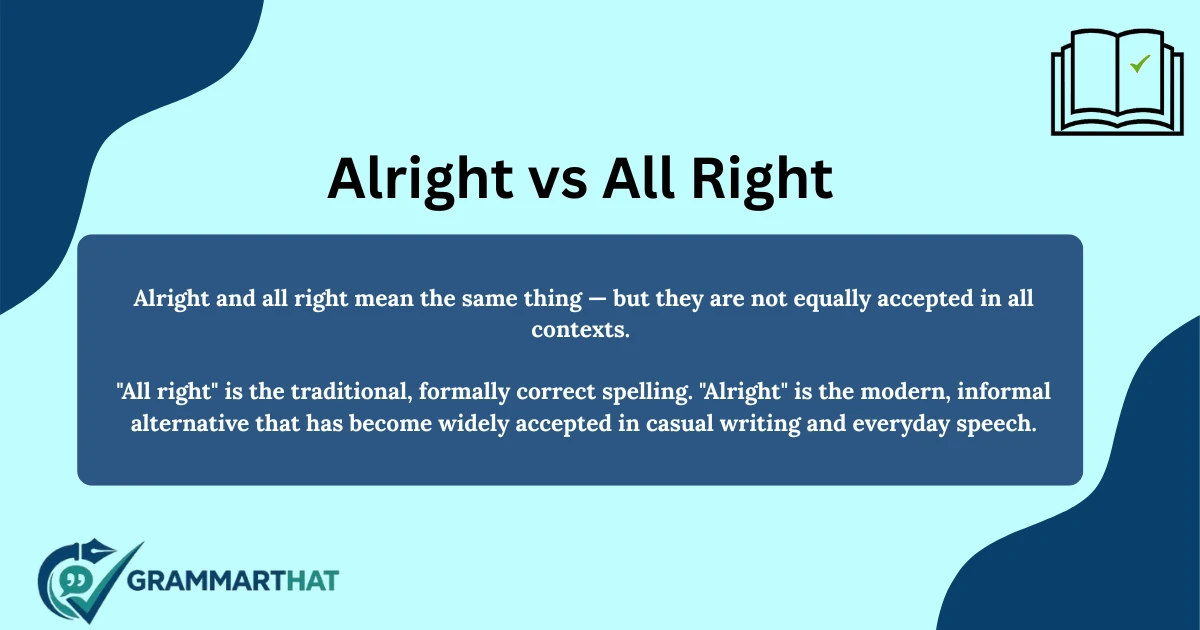
Alright and all right mean the same thing — but they are not equally accepted in all contexts. “All right” ...
Read more