Goodbye vs Good Bye vs Good-bye: Which One Is Correct?
“Goodbye,” as a single, closed word, is the correct and standard spelling. The other variants — “good-bye,” “good bye,” and ...
Read moreOurselves vs Ourself: What’s the Real Difference?
“Ourselves” is the standard plural reflexive pronoun used for two or more people, while “ourself” is a rare singular form ...
Read moreShiny or Shiney: What’s the Real Difference?
“Shiny” is the correct spelling; “shiney” is always an error. There’s no context in standard English where the extra “e” ...
Read moreSweet vs Sweat: What’s the Real Difference? Never Confuse Again
“Sweet” and “sweat” are two different English words that are often confused because of their similar spelling and pronunciation. Once ...
Read moreChoosing vs Chosing: What’s the Real Difference?
The correct spelling is “choosing,” with two “o”s. “Chosing,” with one “o,” is always a misspelling in standard English. This ...
Read moreQuieter vs More Quiet: What’s the Real Difference?
Both “quieter” and “more quiet” are grammatically correct. However, “quieter” is much more common and preferred in everyday English. This ...
Read moreSimpler vs More Simple: What’s the Real Difference?
“Simpler” is the preferred and most common comparative form of the word “simple.” “More simple” is technically understood but is ...
Read moreSwap vs Swop: What’s the Real Difference?
“Swap” and “swop” mean the exact same thing, but “swap” is the standard, globally preferred spelling. “Swop” is an older, ...
Read moreTying O Tieing: What’s the Real Difference?
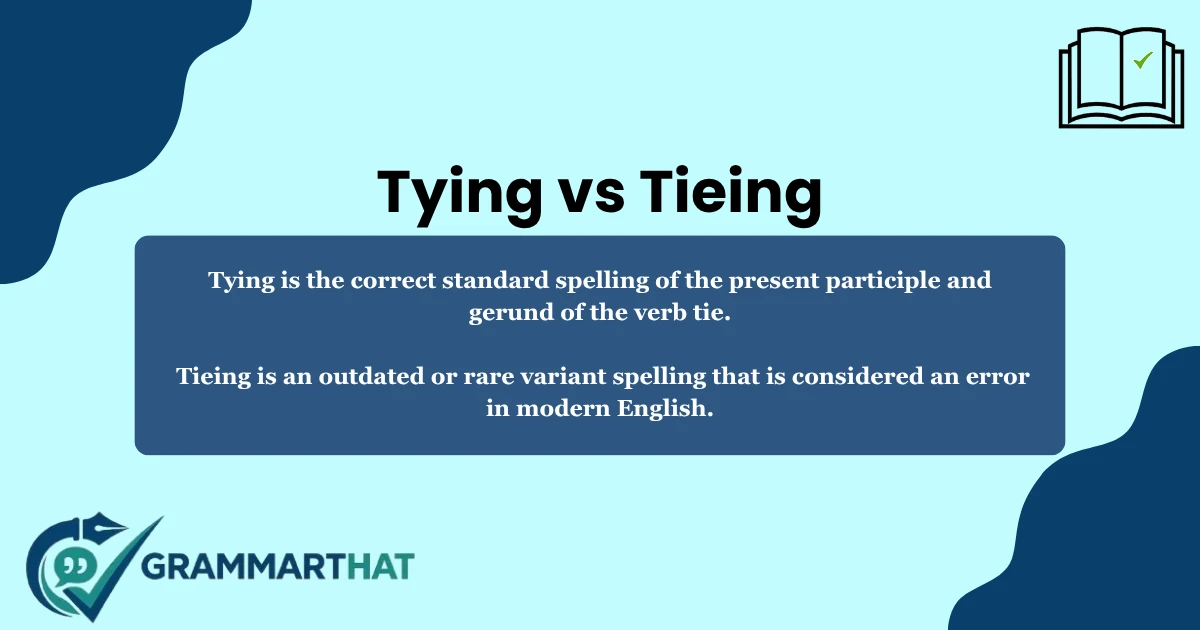
“Tying” is the correct standard spelling of the present participle and gerund of the verb “tie,” meaning to fasten, make ...
Read moreOn Site or On-Site: What is the Difference & Which is Correct?
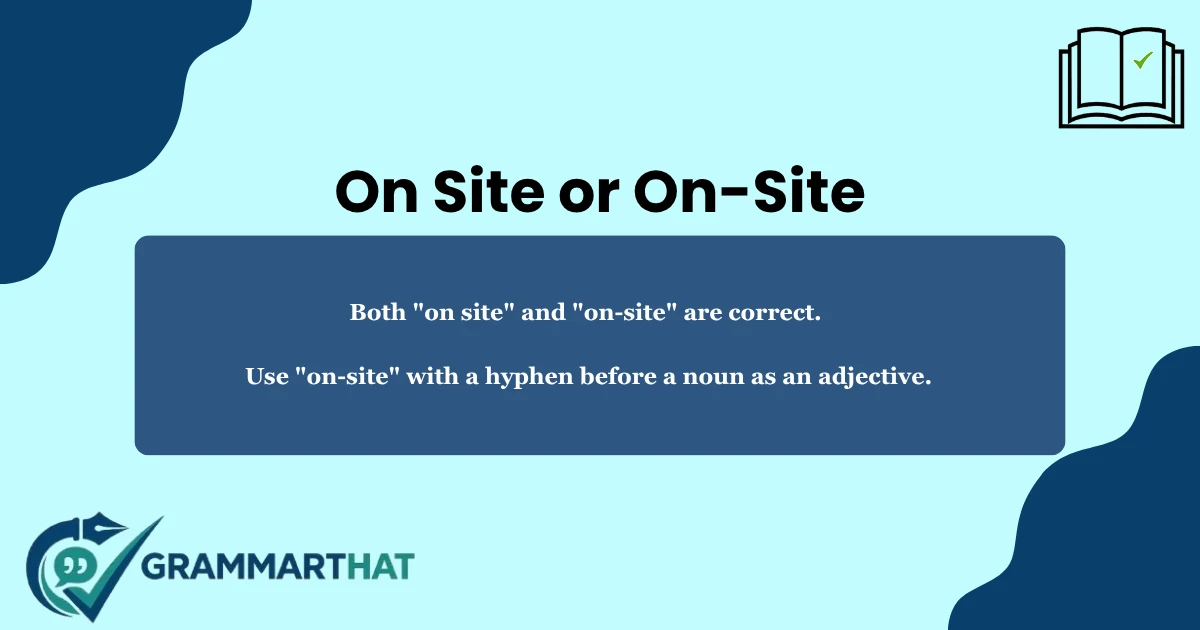
Both “on site” and “on-site” are correct. Use “on-site” with a hyphen before a noun as an adjective. Use “on ...
Read more