Imbed and embed mean exactly the same thing — they are two spellings of the same word.
The only difference is that embed is the modern, universally preferred spelling, while imbed is an older variant that still technically exists but is rarely used in contemporary writing.
This guide explains what embed means, when imbed is acceptable, and why embed is always the safer and more standard choice.
What Does Embed Mean?
Embed functions as a verb (and occasionally a noun in digital contexts) meaning to fix something firmly within a surrounding material, context, or system — so that it becomes an integrated, inseparable part of the whole.
It comes from the prefix em- (a variant of en-, meaning “in” or “into”) combined with bed — the base meaning being “to put into a bed” or “to fix deeply into a surface.”
Example: “The construction workers embedded steel rods into the concrete foundation.”
Embed — Physical / Literal Meaning
Describing something physically fixed or inserted into a surrounding material:
- “Gravel was embedded in the wound after the fall.”
- “The artifact was embedded in the rock for thousands of years.”
- “The splinter embedded itself deeply in his finger.”
Embed — Technological Meaning
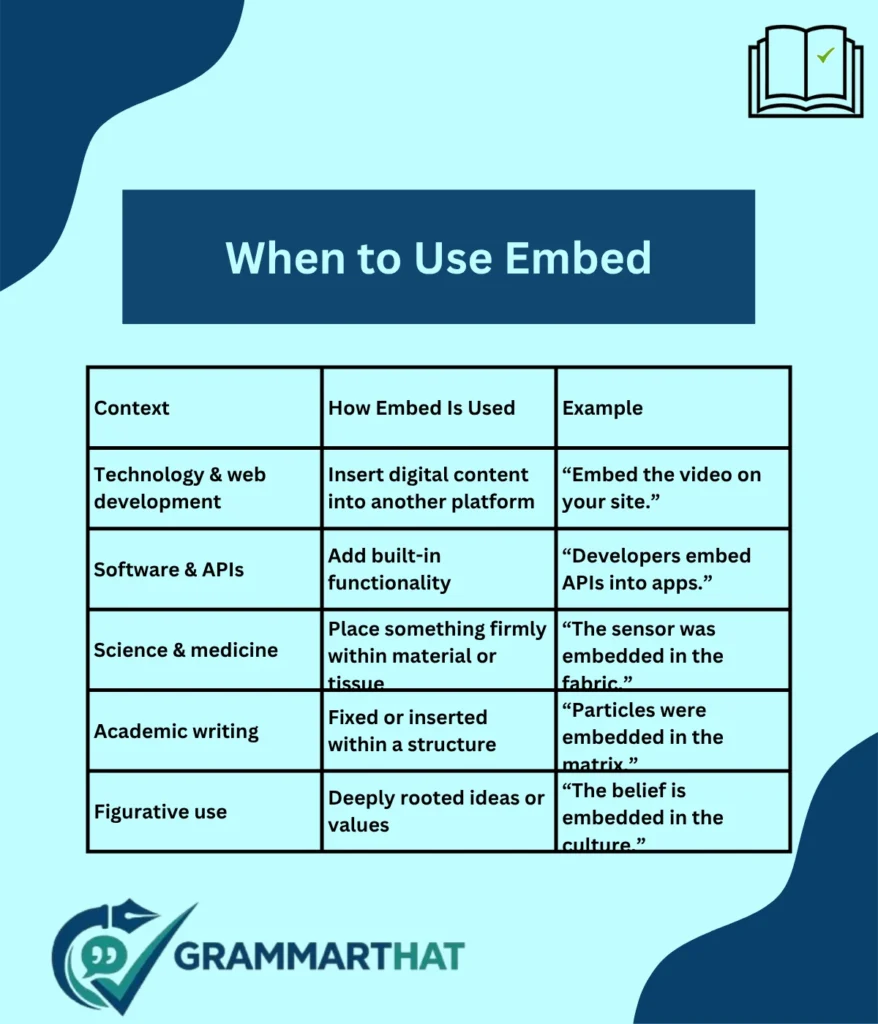
In digital and technology contexts, embed refers to inserting a piece of content or code from one platform into another — placing a video, map, social media post, or widget within a webpage or document:
- “She embedded the YouTube video directly into her blog post.”
- “Copy the embed code to add the map to your website.”
- “The developer embedded the audio player into the app interface.”
Embed — Figurative Meaning
Describing ideas, habits, values, or concepts that are deeply fixed within a culture, person, or system:
- “The values were deeply embedded in the organization’s culture.”
- “Fear of failure becomes embedded in children who face constant criticism.”
- “Certain assumptions are embedded in the way we frame the problem.”
Embed — Journalism
Embedded journalists are reporters assigned to travel and work with a military unit — physically integrated within the group they are covering:
- “The embedded reporter filed daily dispatches from the front lines.”
Related Word Forms: Embed
Synonyms: insert, implant, fix, lodge, set, incorporate, integrate
What Does Imbed Mean?
Imbed means exactly the same thing as embed — to fix firmly within a surrounding material or context. There is no difference in meaning whatsoever. The im- prefix is simply an older, alternative form of the em- prefix — both derive from the Latin in-.
Example: “The fossil was imbedded in the limestone for millions of years.”
Imbed was historically more common before embed became the dominant modern form. You may encounter it in older texts, historical documents, and some regional usage — but it appears rarely in contemporary professional writing.
Embed vs Imbed — The Only Difference
Is “Imbedded” Ever Correct?
Imbedded is technically correct as the past tense of imbed — just as embedded is the past tense of embed. However, embedded is so thoroughly dominant in modern usage that imbedded appears extremely rarely and may look unusual to readers.
In all cases, the embed forms are preferred in every modern context.
When to Use Embed
In Technology and Digital Contexts
Embed is the only standard spelling in digital media, web development, and technology:
- “Embed a video from YouTube into your website.”
- “The embed code creates a responsive player in any browser.”
- “Developers embed APIs to add functionality to applications.”
In Scientific and Academic Writing
Embed is the standard in scientific, medical, and academic publications:
- “The electrode was embedded in the cortical tissue.”
- “Nanoparticles were embedded in the polymer matrix.”
- “The researchers embedded the sensor in the subject’s clothing.”
In Figurative and Cultural Contexts
Embed describes deeply rooted ideas, values, or assumptions:
- “Systemic bias is deeply embedded in institutional practices.”
- “The tradition is embedded in the community’s identity.”
Common Mistakes to Avoid
Memory trick:
- Embed → starts with em- → think “em-powered, em-brace” — modern, active, integrated
- Imbed → starts with im- → like “im-pressed in stone” — ancient, preserved in old usage
- When in doubt — embed is always correct and always preferred
Read More:
FAQs — Imbed vs Embed
What is the difference between imbedding and embedding?
There is no difference in meaning. Embedding is the modern, standard present participle — universally used in professional, digital, and academic writing. Imbedding is the older variant — technically correct but rarely seen in contemporary usage. Always use embedding.
Is “imbedded” ever the correct spelling?
Imbedded is technically correct as the past tense of imbed — but it is considered outdated and is rarely used in modern writing. Embedded is the universally preferred past tense form in all contemporary contexts.
What does “imbed” mean in text?
Imbed means the same as embed — to fix something firmly within a surrounding material, system, or context. In modern digital usage, however, you will almost never see imbed — embed is the standard term used for inserting content or code into a webpage or document.
What does “embed” mean?
Embed means to fix something firmly within a surrounding substance, structure, or system — so it becomes a deeply integrated part of the whole. It applies to physical objects fixed in materials, digital content inserted into webpages, ideas deeply rooted in cultures, and journalists integrated within military units.
Conclusion
Embed and imbed mean exactly the same thing — but only embed is the modern, universally accepted standard. Imbed is an older spelling that still technically exists but has largely faded from contemporary professional writing.
In every context — technology, science, journalism, academic writing, or everyday communication — embed is the correct, expected, and always-safe choice. Use it consistently and you will never need to think about imbed again.

Hi, I’m the voice behind GrammarThat.com. I make grammar simple and easy to understand, from basic rules to advanced writing tips. Clear explanations. Practical examples. No confusion.