Americans have a remarkable number of ways to talk about money. In a single conversation you might hear someone mention bucks, bills, dough, bread, Benjamins and a few grand, all without anyone blinking. Some of these words are centuries old, while others come from hip-hop, sports or the internet. Understanding them makes it easier to follow movies, songs and everyday chat, and it says a lot about how language evolves. Here is a guide to the most common American money slang and where it came from.
Paying Online: Modern Money Words
The way Americans pay has changed quickly, and so has the vocabulary. People now “Venmo” a friend, “Zelle” their rent or “tap to pay” at the store. Brand names have become verbs, just as “Google” did for searching. Saying “I’ll PayPal you” is perfectly normal, even though PayPal is a company name.
Digital wallets are used for almost everything, from online shopping to subscriptions and gaming. PayPal in particular is popular because it lets people pay without sharing card details, which is why it shows up in so many online services, from marketplaces to PayPal casinos and streaming platforms. Words like “checkout,” “cart,” “refund” and “chargeback” have become part of everyday speech thanks to online buying.
Buck and Bucks
“Buck” is probably the most common slang word for a dollar. Its origin is often traced back to the 1700s, when deerskins, or buckskins, were used as a unit of trade on the American frontier. Over time, “buck” came to mean a dollar, and the word stuck.
Today it appears in phrases like “make a quick buck,” “bang for your buck” and “pass the buck,” although the last one may actually come from poker rather than money.
Benjamins and Other Bill Names
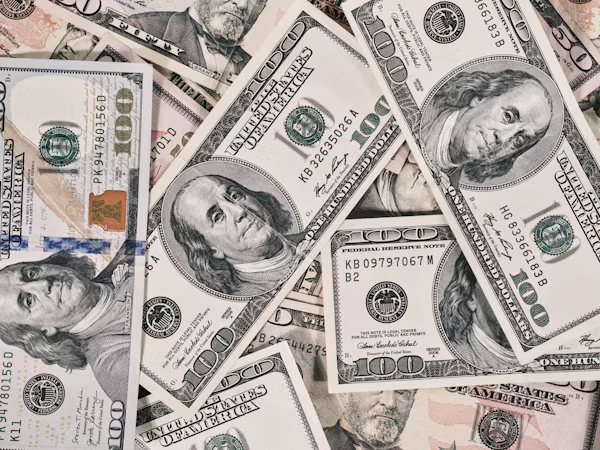
“Benjamins” refers to $100 bills, which feature Benjamin Franklin. The word became especially popular in the 1990s thanks to hip-hop, most famously in the phrase “It’s all about the Benjamins.” Similarly, a $20 bill is sometimes called a “Jackson,” after Andrew Jackson, and a $50 bill can be a “Grant.”
The U.S. Currency Education Program explains the design and security features of each note, including who appears on them and why.
Dough, Bread and Cheddar
Food-related money slang is common in American English. “Dough” has been used since the 1800s, possibly because money, like dough, is something you need to “make.” “Bread” followed, with the same logic: it is what puts food on the table. “Cheddar” and “cheese” became popular in the 1990s and 2000s, often in music and pop culture.
Grand, G and K
A “grand” means one thousand dollars, and it has been used since the early twentieth century. It is often shortened to “G,” as in “five Gs.” In more recent years, “K” from the metric “kilo” has also become popular, especially in business and online, as in “a 50K salary.”
Small Change: Nickels, Dimes and Quarters
Coins have their own names. A “penny” is one cent, a “nickel” is five cents, a “dime” is ten cents and a “quarter” is twenty-five cents. These names lead to expressions like “nickel and dime,” meaning to charge many small amounts, and “a dime a dozen,” meaning something is very common.
“Two cents” means a personal opinion, as in “Here’s my two cents.” The phrase likely comes from the British “my two pennies’ worth.”
Money Verbs and Phrases
American English also has many verbs and expressions about spending and saving. “Shell out” means to pay, often unwillingly. “Splurge” means to spend a lot on something special. “Pinch pennies” means to be very careful with money, and someone who does this might be called “cheap” or “frugal,” depending on how kind you want to be.
“Break the bank” means to cost too much, and “pay through the nose” means to pay an unreasonable price.
Using Money Slang Correctly
Slang is fun, but context matters. Words like “bucks” and “grand” are fine in casual conversation and even in many workplaces. Terms like “Benjamins” or “cheddar” sound more playful and are best kept for informal settings.
If you are learning English, try listening for these words in TV shows, podcasts and songs. You will quickly notice how often Americans talk about money without ever saying the word “money.”
https://grammarthat.com/maximizing-your-settlement-in-personal-injury-claims/
https://grammarthat.com/improving-commercial-hvac-efficiency/