Key Takeaways
- Start with the fence’s primary purpose before selecting a material or style.
- Plan for Cincinnati weather, drainage, mature landscaping, and seasonal yard care.
- Confirm boundaries, local requirements, and utility locations before digging.
- Give gates, access routes, and future projects the same attention as fence panels.
- Low-maintenance fencing still benefits from regular cleaning and inspections.
Table of Contents
- Why Fence Planning Matters
- Define the Main Purpose
- Compare Fence Materials
- Plan the Layout and Access
- Check Boundaries, Rules, and Utilities
- Address Slopes, Drainage, and Landscaping
- Consider Pool and Pet Safety
- Build a Practical Budget
- Create a Maintenance Plan
- Frequently Asked Questions
- Conclusion
A well-planned fence can make a Cincinnati yard more private, safer for pets and children, and easier to maintain through humid summers, steady rain, and winter freeze-thaw cycles. Whether the goal is a backyard boundary, a pool barrier, or a defined outdoor living area, choosing the right layout and material early helps prevent expensive changes later.
For homeowners comparing durable, open-view options, an aluminum fence Cincinnati OH can provide a clean perimeter without the routine staining or sealing associated with many wood designs. The best choice still depends on the property’s slope, privacy needs, gate locations, landscaping, and expected daily use.
Why Fence Planning Matters
A fence changes how a yard functions. It can shape foot traffic, affect views from patios and windows, create a pet run, protect a garden, or establish a more comfortable space for entertaining. Planning also helps avoid common frustrations, such as a gate that opens into a planting bed or a fence line that leaves no access for lawn equipment.
Define the Main Purpose
Identify the fence’s most important job before focusing on color or ornament. Privacy fencing generally calls for limited gaps and thoughtful placement around sight lines. Pet containment may require narrow picket spacing, stronger posts, and attention to digging or climbing behavior. A decorative front-yard fence may prioritize visibility and curb appeal, while a security-minded layout may emphasize lockable gates and controlled access.
Compare Common Fence Materials
- Wood: Offers a traditional appearance and flexible design choices. It usually needs periodic cleaning, finish renewal, and prompt repairs when boards or fasteners are damaged.
- Vinyl: Has a consistent appearance and is commonly cleaned with water and mild soap. Homeowners should inspect panels and posts after severe weather or impacts.
- Aluminum: Provides a lightweight, open-view option that does not rust like untreated iron. It works well around gardens, pools, and sloped yards where visibility matters.
- Steel: Can provide a strong, substantial look. Coated surfaces should be checked for chips or scratches so exposed areas can be addressed.
- Chain link: Creates a practical enclosure for pets and larger areas, though privacy usually requires added screening or landscaping.
No material is maintenance-free. The practical choice is the one that matches the desired level of privacy, the site conditions, and the amount of ongoing care the household is prepared to provide.
Plan the Layout and Access
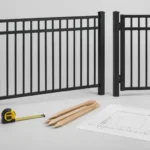
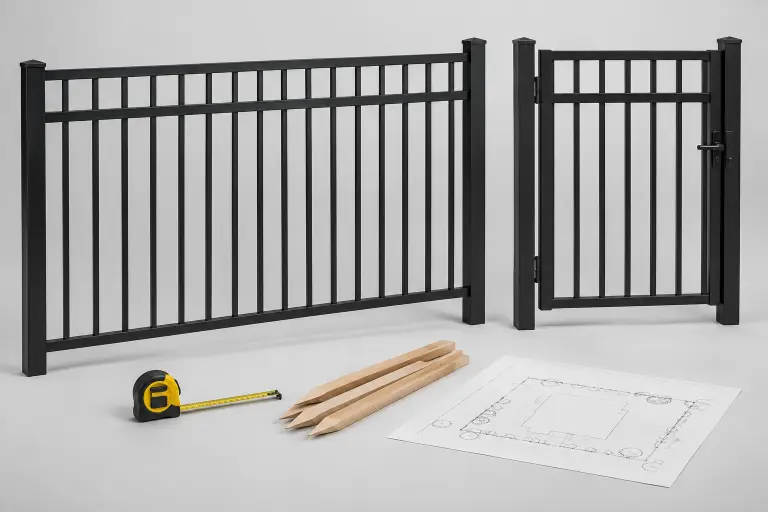
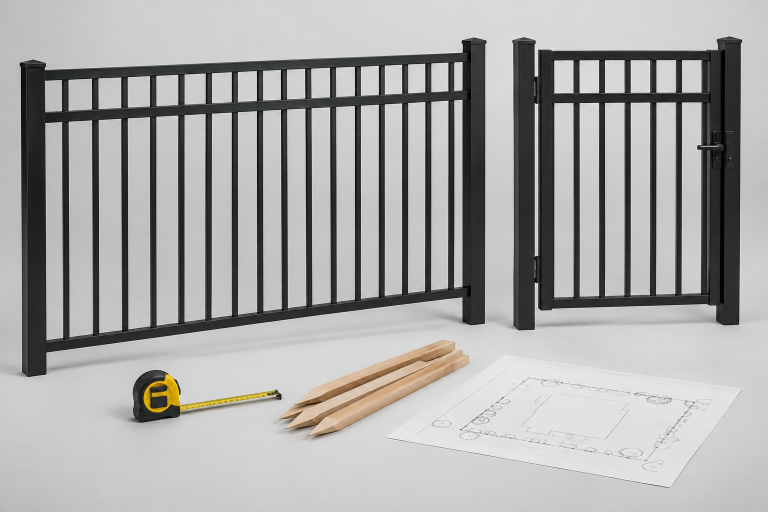
Measure the proposed fence line and sketch the house, driveway, patio, sheds, garden beds, mature trees, and utility features. Marking the route with stakes or temporary paint can reveal whether the design narrows a walkway, blocks a view, or makes a section of the yard difficult to reach.
Gate Planning Essentials
- Place everyday walk gates near the routes people use most often.
- Provide a wider service gate for mowers, wheelbarrows, trash bins, and landscape materials.
- Confirm the gate swing direction before posts are installed.
- Account for uneven ground, snow accumulation, mud, locks, and latch placement.
Check Boundaries, Rules, and Utilities
Do not assume an existing fence, row of shrubs, or mowing line marks the legal property boundary. Review available survey documents and check applicable city, county, and homeowners association requirements before ordering materials. Height limits, placement rules, easements, and corner-lot sight-line considerations can affect the final plan.
Before any post holes are dug, follow federal safe digging guidance by contacting 811 to request utility marking. Fence installation can involve excavation near buried lines, so this step should happen before work begins, not after the layout is finalized.
Address Slopes, Drainage, and Landscaping
Cincinnati-area yards can vary from level lots to rolling terrain. On a slope, a fence may step down in sections or follow the grade, depending on the material and visual goals. Either approach should leave appropriate clearance where needed and should not interfere with natural drainage paths.
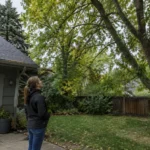
Keep soil, mulch, vines, and dense shrubs from pressing directly against fence sections. This makes inspections easier, improves airflow, and reduces the chance that moisture or plant growth will hide damage. Take extra care near mature trees, since digging can affect significant roots.
Consider Pool and Pet Safety
A pool fence is a safety barrier, not simply a landscape feature. The Consumer Product Safety Commission’s home pool barrier guidelines emphasize features such as appropriate barrier design and self-closing, self-latching gates. Local requirements may be more specific, so confirm them before construction.
For pets, match the fence to the animal rather than relying on a standard design. Small dogs may fit through larger openings, while large or active dogs may need taller sections, robust gate hardware, and measures that discourage digging beneath the fence.
Build a Practical Budget
Fence costs involve more than the price of panels or pickets. Include total linear footage, gate quantity and width, terrain, soil conditions, removal of an old fence, permits, survey needs, drainage work, hardware, and site access. When comparing estimates, look for clear descriptions of materials, labor, cleanup, warranties, and possible extra charges.
Create a Simple Maintenance Plan
Inspect a fence at least twice a year and after major storms. Look for leaning posts, loose fasteners, damaged sections, corrosion, cracked components, and gates that no longer close or latch properly. Remove leaves and soil buildup, trim back vegetation, and address small finish damage before it becomes a larger repair.
Frequently Asked Questions
What is the best low-maintenance fence material?
There is no single best choice for every Cincinnati property. Aluminum and vinyl are often selected for lower routine upkeep, while wood may suit homeowners who prefer a natural look and are willing to maintain it. Privacy, budget, terrain, and desired appearance should guide the decision.
Should a fence be installed before landscaping?
Often, yes. Installing the fence first can establish the usable boundary and reduce the risk of disturbing new plants, irrigation lines, lighting, patios, or garden features.
Can a fence be installed on sloped ground?
Yes. A qualified installer can evaluate whether stepped panels, grade-following sections, or a combination of methods best fits the slope and fence system.
Conclusion
A low-maintenance yard fence begins with careful planning, not just material selection. By considering purpose, access, drainage, safety, local requirements, and simple long-term care, Cincinnati homeowners can create a fence that continues to support the yard for years to come.
Also Read
- Innate vs. Enate Homophones: Spelling & Definition
- NSFW Meaning in Text: Usage, Examples & More
- Inclosed vs Enclosed: What’s the Real Difference?