By Stuart Marsh
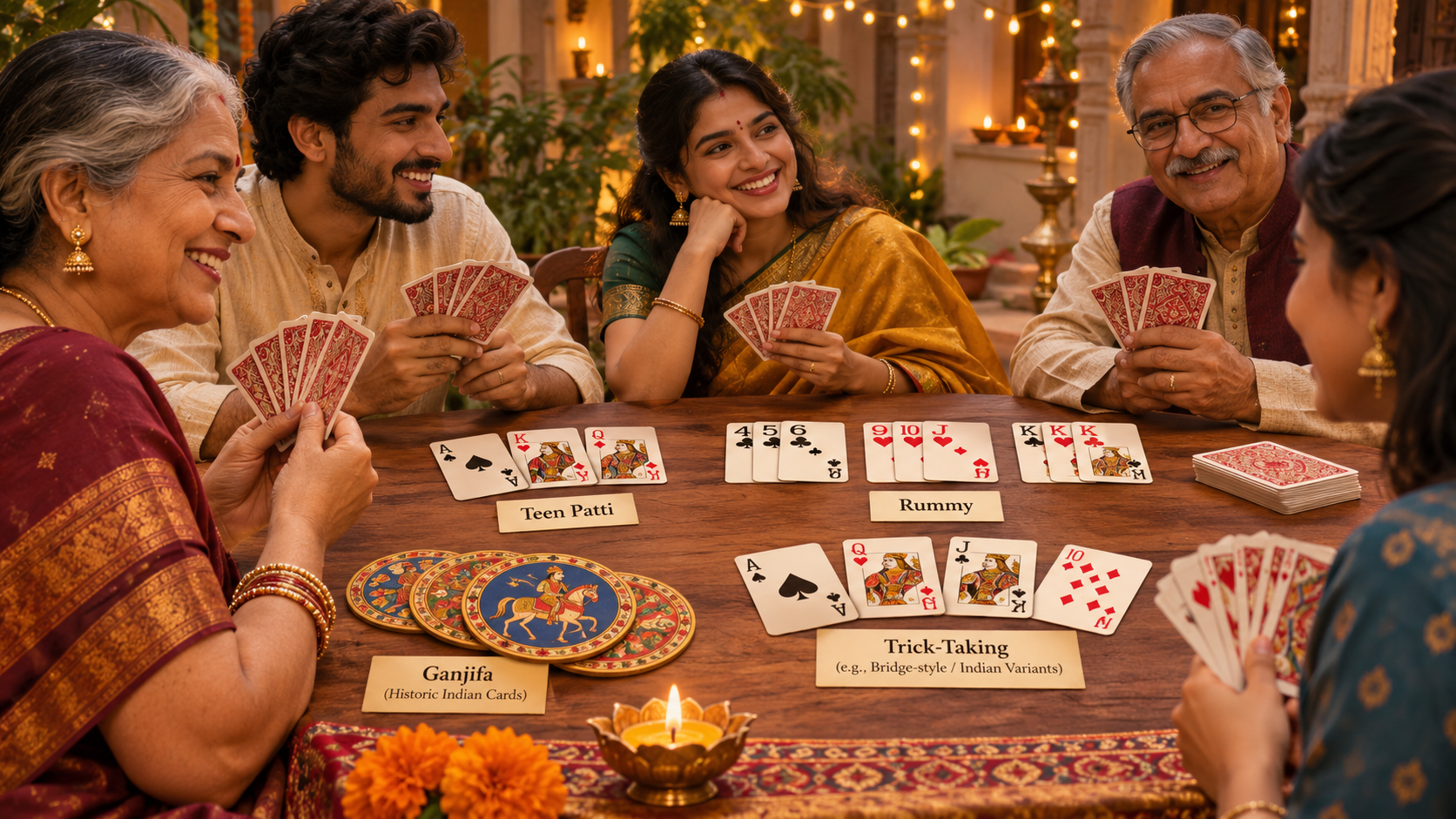
Card games have been part of Indian social life for generations. Families play them during Diwali, friends gather for weekend matches, and experienced players pass down rules to younger relatives. Some games take only a few minutes to learn, while others require careful planning and teamwork. Traditional Indian card games include Teen Patti, Rummy, Court Piece, Mendicot, and several regional favourites. Each offers a different experience. Some depend on matching cards or forming combinations. Others involve winning tricks, reading opponents, or working with a partner. This guide explores seven popular Indian card games, explains their basic rules, and helps beginners choose which one to learn first. Traditional Indian card games include Teen Patti, Rummy, Court Piece, Mendicot, and several regional favourites. Players can also explore real teen patti to learn more about this classic three-card game.
The History of Traditional Card Games in India
India has a long history of playing cards. Traditional decks were once handmade, decorated with colourful artwork, and used in games that differed from today’s familiar 52-card formats.
From Ganjifa Cards to Modern Playing Cards
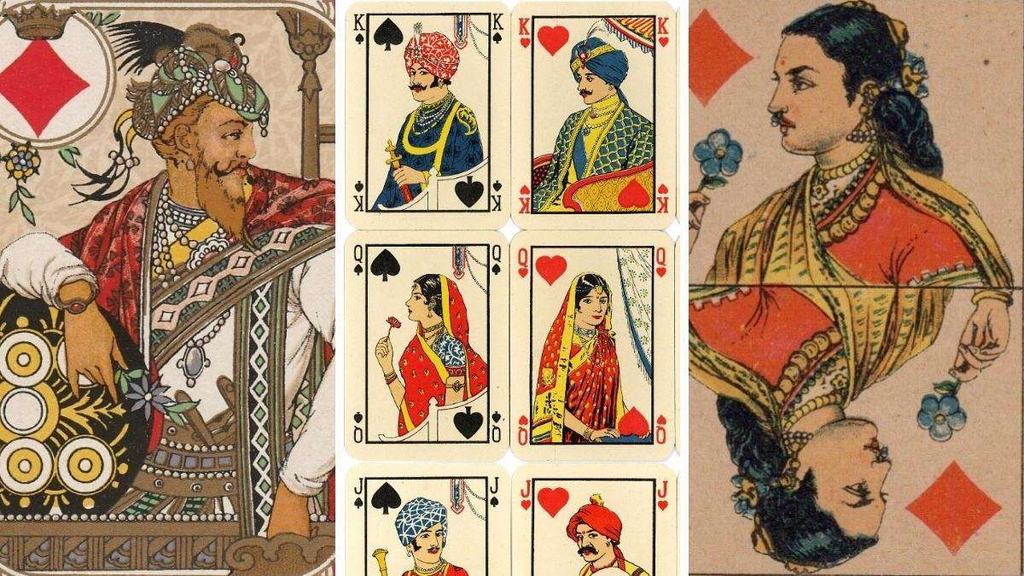
Ganjifa is an important part of India’s card-playing heritage. These cards became prominent during the Mughal period and developed distinct regional styles. Many traditional decks featured circular cards made from painted paper, cloth, or other materials. Unlike modern playing cards, Ganjifa decks often contained eight, ten, or more suits. Their artwork depicted royal figures, religious stories, animals, and decorative patterns. One famous variation is Dashavatara Ganjifa, which features the ten avatars of Vishnu. Different communities developed their own playing rules and artistic traditions. As printed European-style cards became more accessible, standard rectangular decks gradually replaced many traditional formats. However, Ganjifa remains an important part of India’s artistic and gaming heritage.
Why Card Games Are Popular During Indian Festivals
Diwali is closely associated with card-playing gatherings in many Indian households. Teen Patti is particularly well known during the festival, although families also enjoy Rummy and other games. These gatherings are often as much about conversation as competition. Relatives sit together, explain familiar rules, and introduce younger players to their favourite games. The tradition varies between families and regions. Some people play for points or entertainment, while others associate certain games with monetary stakes.
7 Popular Traditional Indian Card Games
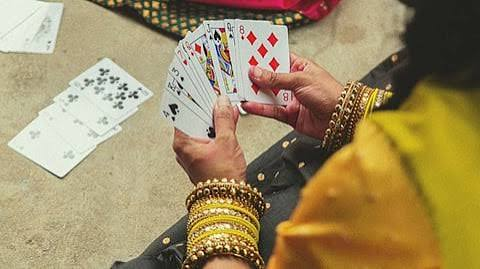
Indian card games range from simple guessing games to complex competitions involving partnerships and bidding. The following seven games represent several popular styles of play.
1. Teen Patti
Teen Patti, meaning “three cards” in Hindi, is one of India’s best-known social card games. It resembles three-card brag and uses a standard 52-card deck without jokers. Each player receives three cards. The goal is to hold a stronger combination than the remaining opponents. The standard hand rankings, from strongest to weakest, are:
- Trail: Three cards of the same rank.
- Pure Sequence: Three consecutive cards of the same suit.
- Sequence: Three consecutive cards of different suits.
- Colour: Three cards of the same suit.
- Pair: Two cards of the same rank.
- High Card: A hand without any stronger combination.
For example, three queens form a Trail, while the 5, 6, and 7 of hearts form a Pure Sequence. Traditional Teen Patti often includes betting decisions and bluffing. However, friends can adapt the game into a points-based competition without financial stakes. The game is commonly played with three to six participants, although larger groups are possible.
2. Indian Rummy
Indian Rummy is a popular card game that combines memory, planning, and probability. The familiar 13-card format is commonly played with two or more players. Each participant receives 13 cards and must arrange them into valid sequences and sets. A sequence contains at least three consecutive cards of the same suit. A set contains three or four cards of the same rank but different suits. An important rule is that a valid declaration must contain at least two sequences, including one pure sequence. A pure sequence is formed without using a joker as a substitute. For example, 4♥, 5♥, and 6♥ form a pure sequence. During each turn, a player draws a card from the available stock or discard pile and discards one card. The objective is to complete the required combinations before the opponents. Rummy rewards players who track discarded cards and adjust their plans as new cards become available.
3. Andar Bahar
Andar Bahar is a simple Indian card game based mainly on chance. It uses a standard deck and two sides called Andar and Bahar. A reference card is placed face up. The dealer then distributes cards alternately between the two sides until another card of the same rank appears. For example, if the reference card is the 9 of clubs, the round ends when another nine appears. The side receiving the matching card determines the result. Unlike Rummy or Court Piece, Andar Bahar offers little meaningful strategic control over the outcome. Once dealing begins, the result depends on the order of the cards. The rules are easy to understand, although betting versions may use different payout systems.
4. Bluff (Cheat)
Bluff is a popular group card game that tests confidence, observation, and deception. The main objective is to get rid of all your cards. Players place cards face down and announce their ranks. However, the announcement does not have to be truthful. For example, a player may place two cards on the table and announce “two kings” even if neither card is a king. Other players can challenge the claim by calling “Bluff.” If the claim is false, the player who placed the cards must collect the pile. If the claim is true, the challenger collects it instead. The exact rules vary between groups. Some versions require players to announce ranks in a fixed sequence, while others allow more freedom. Bluff works particularly well for larger gatherings because it encourages conversation and playful competition.
5. Court Piece (Rang)
Court Piece, also known as Rang or Coat Piece, is a four-player trick-taking game. Players form two teams, with partners sitting opposite each other. A standard 52-card deck is used. The objective is to win tricks by playing higher cards or using the trump suit. A trick begins when one player places a card on the table. The other players must follow the same suit if they can. The highest card of the leading suit wins unless a trump card is played. In that case, the highest trump wins. The winning player leads the next trick. Teamwork is essential because partners must consider which cards their teammate might hold. In many common versions, winning seven of the thirteen tricks is enough to win a deal. Special scoring rules may apply when a team wins several consecutive deals or achieves a sweep.
6. Mendicot
Mendicot is a traditional partnership card game played especially in Maharashtra, Gujarat, and other parts of western India. Four players form two teams and use a standard 52-card deck. The main objective is to capture cards with the rank of ten. Players win tricks by following the leading suit or using trump cards according to the agreed rules. A team that captures at least three of the four tens usually wins the deal. If each team captures two tens, the number of tricks won becomes important. For example, a team holding three tens has secured the main objective even if the opposing team has captured several high-ranking cards. Some variations use an openly selected trump suit, while others keep the trump suit concealed until a particular point in the game. Mendicot is a good introduction to partnership games because its scoring objective is relatively easy to remember.
7. Twenty-Nine (29)
Twenty-Nine is a trick-taking game played by four people in two partnerships. It is also played in neighbouring South Asian countries. Unlike most games in this guide, Twenty-Nine uses only 32 cards from a standard deck. Cards from seven through ace are included. Its unusual ranking system makes the game interesting:
Jack > 9 > Ace > 10 > King > Queen > 8 > 7.
The jack is worth three points, the nine is worth two, and aces and tens are worth one point each. The remaining cards have no point value. There are 28 card points in the deck, with a possible additional point awarded for the final trick under common rules. Before playing, participants bid on the number of points they believe their team can win. The winning bidder selects a trump suit, and both teams compete to collect enough points through tricks. Twenty-Nine requires careful counting, communication through legal card play, and an understanding of which high-value cards remain. Its combination of bidding and teamwork makes it more challenging than beginner games.
Comparison of Popular Indian Card Games
| Card Game | Players | Main Skill | Difficulty |
| Teen Patti | Usually 3–6 | Hand comparison, bluffing | Easy |
| Indian Rummy | Usually 2–6 | Sequencing, planning | Moderate |
| Andar Bahar | Varies | Mainly chance | Easy |
| Bluff | 3–8 | Deception, observation | Easy |
| Court Piece | 4 | Teamwork, trick-taking | Moderate |
| Mendicot | 4 | Card tracking, teamwork | Moderate |
| Twenty-Nine | 4 | Bidding, strategy | Moderate |
Player counts and scoring systems can differ between regional versions.
How to Play Traditional Indian Card Games
Most traditional card games become easier once you understand card rankings, turns, and winning conditions.
Understanding Cards, Suits, and Rankings
A standard playing-card deck contains 52 cards divided into four suits: hearts, diamonds, clubs, and spades. Each suit contains thirteen ranks, from two through ten, followed by jack, queen, king, and ace. However, card rankings depend on the game. In Teen Patti, an ace is generally a high card, although it can appear in certain low sequences. In Twenty-Nine, the jack ranks above the nine, ace, and king. In Rummy, card combinations matter more than individual card strength. Players focus on building valid sequences and sets. Learning these differences prevents common mistakes when switching games.
Basic Rules Every Beginner Should Know
Before starting a game, establish how cards are distributed, which player moves first, and what determines the winner. In drawing games such as Rummy, participants collect and discard cards to complete combinations. In trick-taking games such as Court Piece, players usually follow the suit of the first card played. The strongest eligible card wins the trick. In comparison to games such as Teen Patti, the final result depends on the relative strength of the players’ hands. Consider a simple Court Piece example. One player leads with the 8 of hearts. The next players place the queen of hearts, 3 of hearts, and ace of hearts. If no trump is played, the ace wins because it is the highest card of the leading suit. Agreeing on house rules before the first round is especially important. Regional versions may use different scoring systems, trump rules, or winning conditions.
Traditional Card Games vs. Online Card Games
Traditional Indian card games have also become available in digital formats. Online versions often preserve the basic rules while changing how players interact.
How Traditional Games Have Changed Online
Physical card games require a deck, a suitable playing space, and people willing to join. Digital versions can automate dealing, check valid moves, and calculate scores. Some allow friends to join private multiplayer rooms, while others offer computer-controlled opponents. The main advantage is convenience. Players can learn rules, practise specific games, or participate remotely. However, digital games may feel different from traditional gatherings. Players cannot always observe facial expressions, and some online versions introduce additional features or modified rules. Automated scoring also means beginners may not learn how to count points independently.
Teen Patti Online and Other Digital Versions
Teen Patti online generally retains the traditional three-card format. Players receive three cards and compare combinations according to the game’s ranking system. Some versions include multiplayer tables, private rooms, or virtual chips. Others introduce side games and additional features that are absent from common household versions. The distinction between free-play and real-money formats matters. Free versions allow players to learn hand rankings without financial risk. Real-money versions involve gambling, financial exposure, and legal restrictions that depend on the jurisdiction. Rummy, Court Piece, and Twenty-Nine also have digital adaptations. When choosing a version for practice, check whether its rules match the game played in your family or region.
Which Indian Card Game Should You Play?
The best choice depends on how many people are available and whether the group prefers quick rounds, individual decisions, or teamwork.
Best Indian Card Games for Beginners
Bluff is a good starting point for larger groups. Its basic objective is easy to understand, and players can learn through a few practice rounds. Teen Patti is another accessible option because each participant receives only three cards. Beginners mainly need to remember six hand categories. Mendicot is suitable for players who want to try partnership games. Its objective of collecting tens is straightforward, although the trick-taking rules require some practice.
Best Card Games for Strategy and Teamwork
Indian Rummy suits players who enjoy organising cards, recognising patterns, and planning several moves ahead. Court Piece offers more direct teamwork. Partners must pay attention to played cards and decide when to use strong cards. Twenty-Nine adds bidding and unusual rankings, making it attractive to experienced trick-taking players.
Best Card Games for Family Gatherings
Bluff is suitable for groups that enjoy conversation and light competition. Rummy works well when participants prefer longer rounds and structured scoring. Court Piece and Mendicot are good options when exactly four players are available. For casual gatherings, games can use points rather than financial stakes.
| If You Enjoy… | Consider Playing |
| Simple rules and quick rounds | Bluff, Teen Patti |
| Planning and forming combinations | Indian Rummy |
| Team-based competition | Court Piece, Mendicot |
| Bidding and strategic decisions | Twenty-Nine |
| Games for larger groups | Bluff |
Tips for Learning Traditional Indian Card Games
The fastest way to learn a new card game is to combine a short explanation with a practice round. Start by understanding what ends the round and what determines the winner. Once that is clear, learn the details of card rankings and special rules. For Teen Patti, keep a hand-ranking chart nearby until you can recognise each combination without help. For Rummy, practise identifying pure sequences before attempting complete declarations. This reduces mistakes when arranging thirteen cards. In Court Piece and Mendicot, watch which suits opponents cannot follow. This information helps you decide when to play stronger cards. Twenty-Nine players should memorise the unusual card rankings before learning advanced bidding tactics. It also helps to write down regional rules. A version learned from relatives may differ from one described in a printed guide. Most importantly, use practice rounds without monetary stakes when introducing unfamiliar games.
Frequently Asked Questions About Traditional Indian Card Games
What Is the Most Popular Traditional Card Game in India?
Teen Patti and Indian Rummy are among the best-known card games in India. Their popularity varies by region, occasion, and age group. Court Piece and Mendicot also have strong regional traditions.
Which Indian Card Games Are Easiest for Beginners?
Bluff and Teen Patti are relatively easy to learn. Bluff focuses on claims and challenges, while Teen Patti requires players to recognise six main hand combinations.
What Card Games Are Traditionally Played During Diwali?
Teen Patti is closely associated with Diwali gatherings in many households. Rummy and other familiar card games are also played, depending on family traditions.
Are Traditional Indian Card Games Based on Skill or Luck?
Both elements appear in many games. Rummy, Court Piece, and Twenty-Nine involve planning and decision-making. Andar Bahar depends mainly on chance, while Teen Patti combines random card distribution with decisions about continuing or folding.
Can Traditional Indian Card Games Be Played Without Money?
Yes. Many card games can be played using points, non-monetary chips, or simple win-and-loss records. This allows participants to enjoy the rules without gambling.
What Is the Difference Between Teen Patti and Indian Rummy?
Teen Patti uses three-card hands that players compare according to fixed rankings. Indian Rummy usually deals thirteen cards and requires players to form valid sequences and sets. Rummy involves more card management, while Teen Patti has a simpler hand structure.
Conclusion
Traditional Indian card games offer different ways to enjoy time with friends and family. Teen Patti provides quick rounds and simple hand rankings, while Indian Rummy rewards planning and careful card selection. Court Piece, Mendicot, and Twenty-Nine introduce teamwork and trick-taking strategies. Learning these games also helps preserve regional traditions. Whether played with physical cards or in a digital practice mode, understanding the rules makes each game more enjoyable and accessible.
Read more: https://grammarthat.com/jqk-casino-review-examining-its-game-selection-and-mobile-experience/
https://grammarthat.com/how-to-stay-safe-on-a-motorcycle-after-dark/
https://grammarthat.com/budgeting-for-ai-video-count-the-clips-your-business-can-use/