Per Say or Per Se: Which One Is Correct? 2026
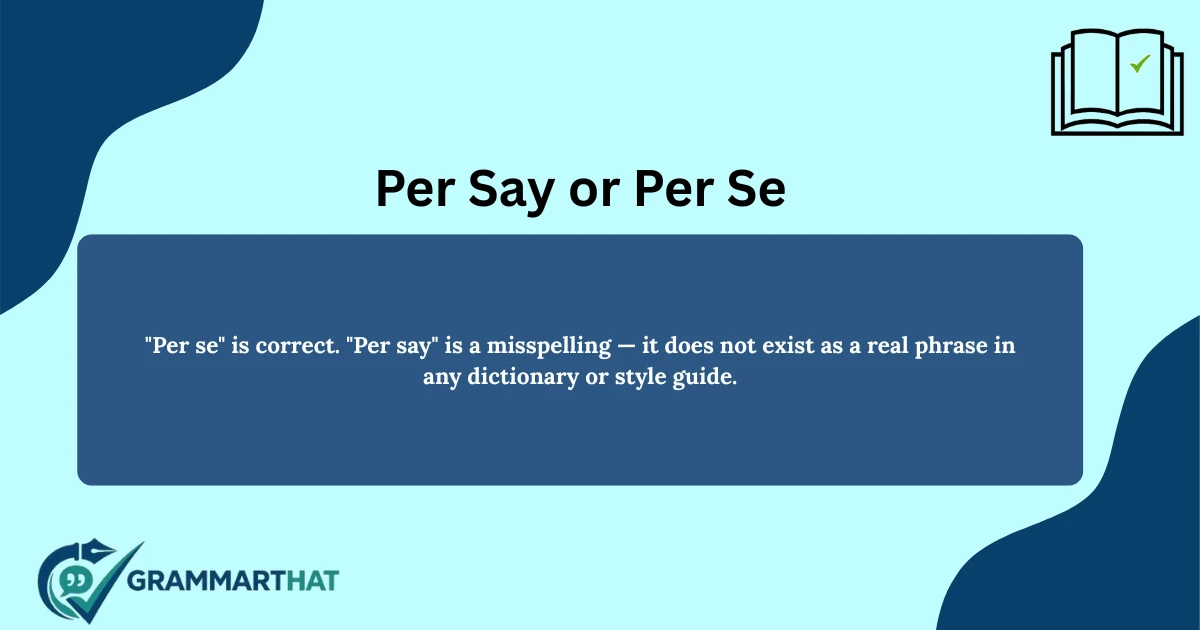
“Per se” is correct. “Per say” is a misspelling and is not recognized in any standard dictionary or style guide. ...
Read moreReschedule To or Reschedule For: Which Is Correct? 2026
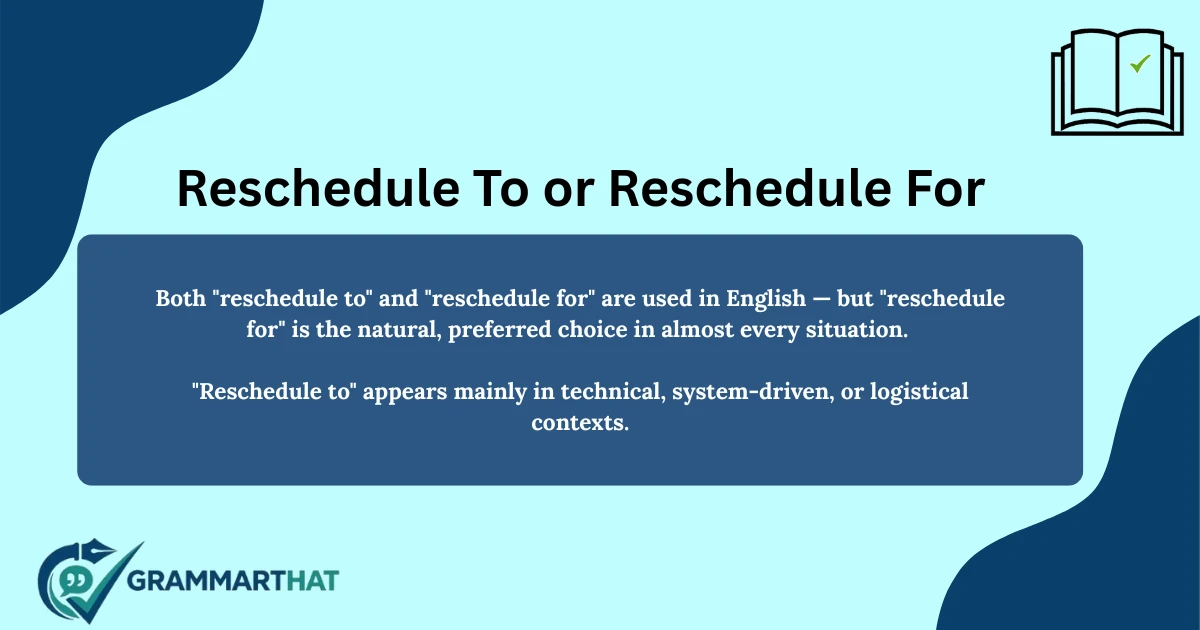
Both “reschedule to” and “reschedule for” are used in English — but they are not equally common. “Reschedule for” is ...
Read moreStay in Touch vs Keep in Touch: What Is the Difference? 2026

Both “stay in touch” and “keep in touch” mean the same thing — to continue communicating with someone over time. ...
Read moreSay Your Peace or Say Your Piece: Which Is Correct? 2026

“Say your piece” is the correct phrase. It means to express your opinion, share your thoughts, or contribute your part ...
Read more
On Friday or In Friday: Which Is Correct? 2026
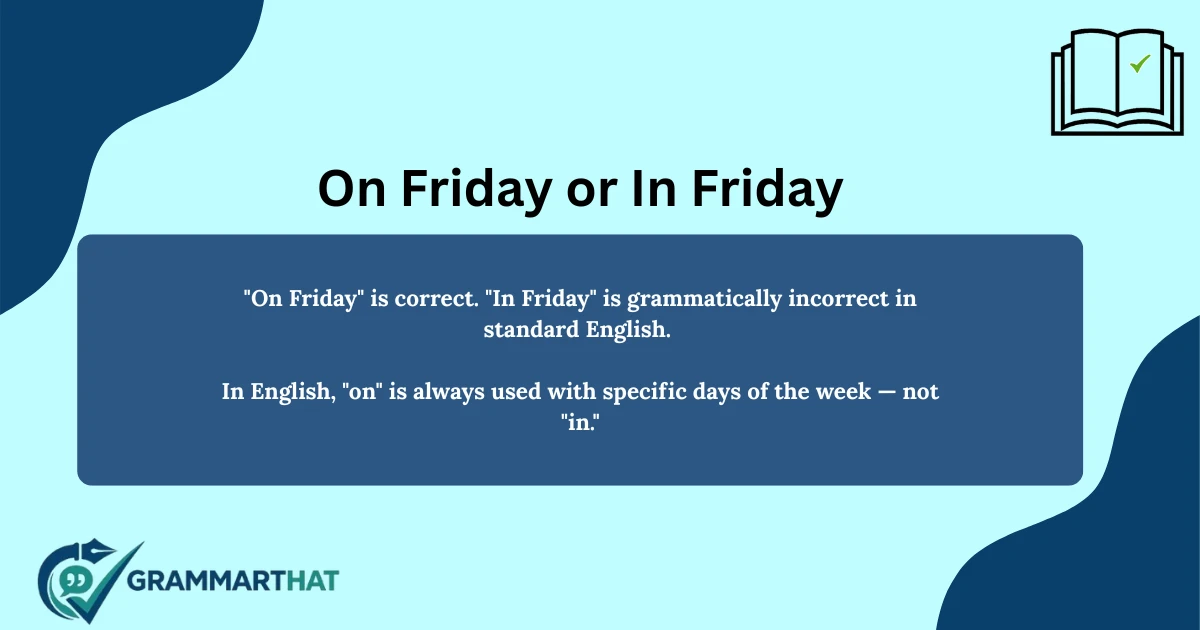
“On Friday” is correct. “In Friday” is grammatically incorrect in standard English. In English, “on” is used with specific days ...
Read moreYou Are Always Welcomed vs Welcome: Which Is Correct? 2026

“You are always welcome” is the correct phrase. “You are always welcomed” is usually incorrect unless you are specifically talking ...
Read moreIn the Store or At the Store: Which One Is Correct? 2026

Both “in the store” and “at the store” are grammatically correct. The difference is about precision rather than correctness. “At ...
Read moreWhole Day or All Day: Which Is Correct? 2026
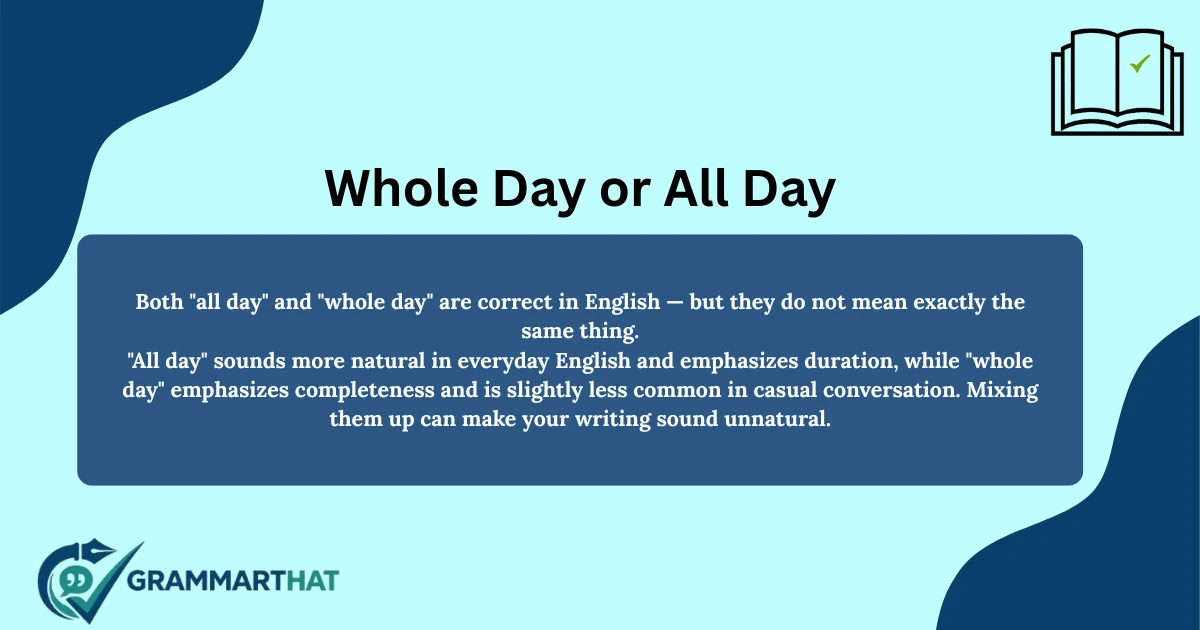
Both “all day” and “whole day” are correct in English — but they do not mean exactly the same thing. ...
Read moreDo Not vs Don’t: Meaning, Difference, and Correct Usage 2026
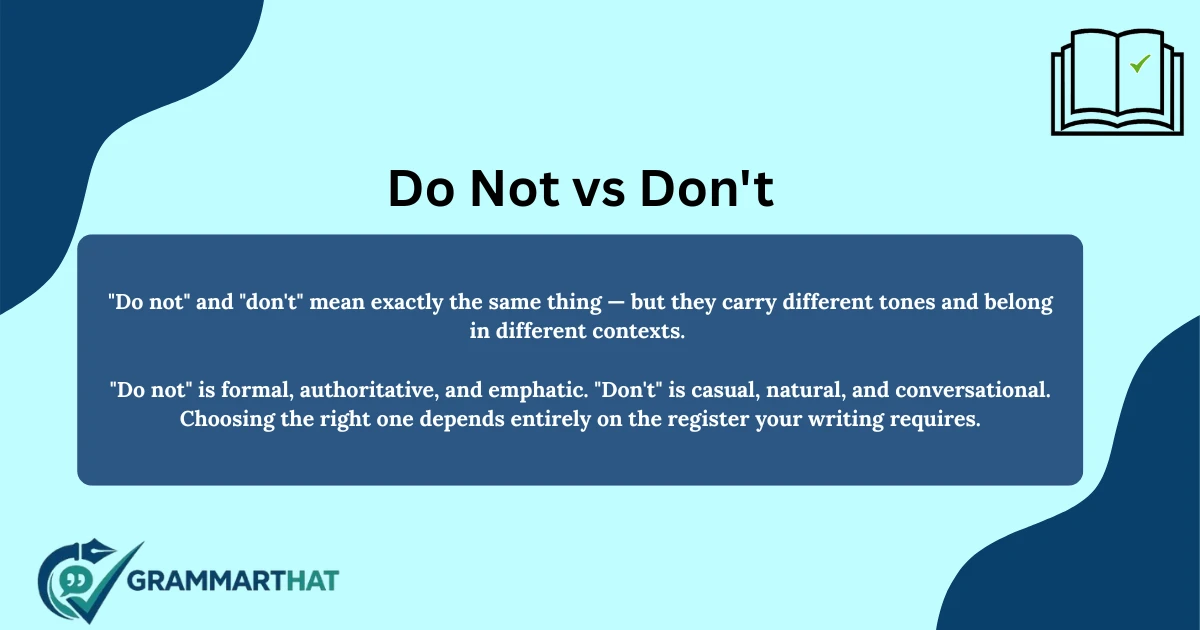
“Do not” and “don’t” mean exactly the same thing — but they carry different tones and belong in different contexts. ...
Read more