There Has Been or There Have Been: Which Is Correct? 2026
Both “there has been” and “there have been” are correct. The right choice depends on the noun that follows the ...
Read moreIn Which vs Where: What’s the Difference 2026
“In which” is generally used in formal writing and for abstract concepts, while “where” is the natural choice for everyday ...
Read moreFor Who or For Whom: Which Is Correct? 2026
“For whom” is grammatically correct in formal English, while “for who” is common in casual speech and informal writing. The ...
Read moreOne or More Is or One or More Are: Which Verb Is Correct? 2026
“One or more is” and “one or more are” can both be correct. The choice depends on the noun that ...
Read moreDo Not vs Don’t: Meaning, Difference, and Correct Usage 2026
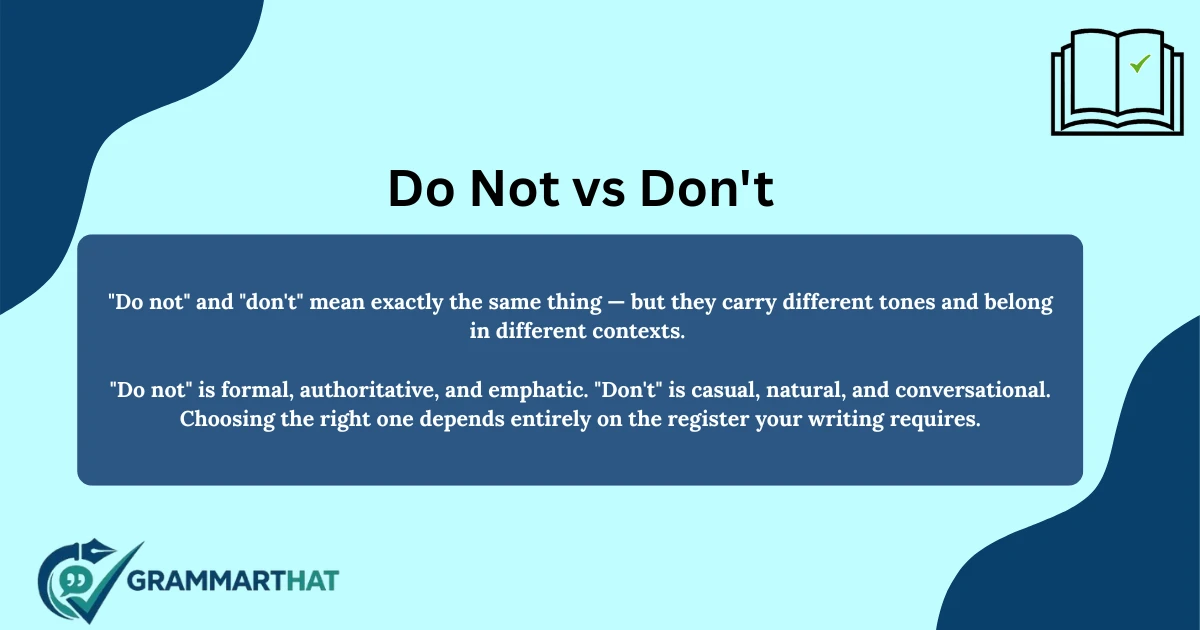
“Do not” and “don’t” mean exactly the same thing — but they carry different tones and belong in different contexts. ...
Read moreEaten or Ate: Which Is Correct? 2026
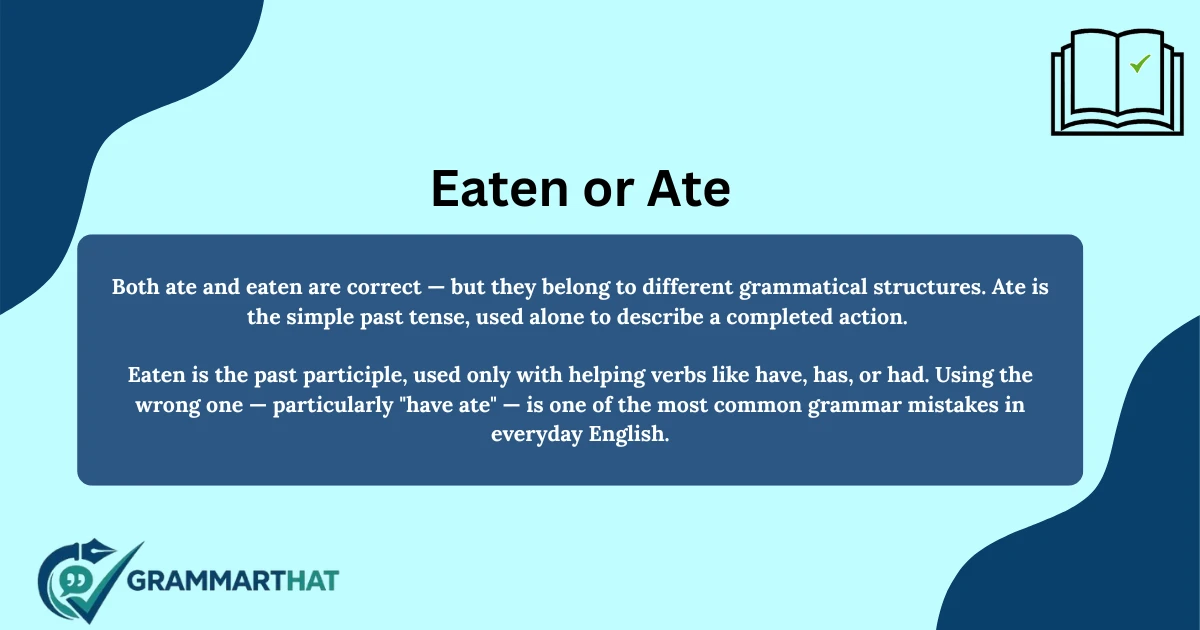
Both ate and eaten are correct — but they belong to different grammatical structures. Ate is the simple past tense ...
Read moreWho Else or Whom Else: Which Is Correct? 2026
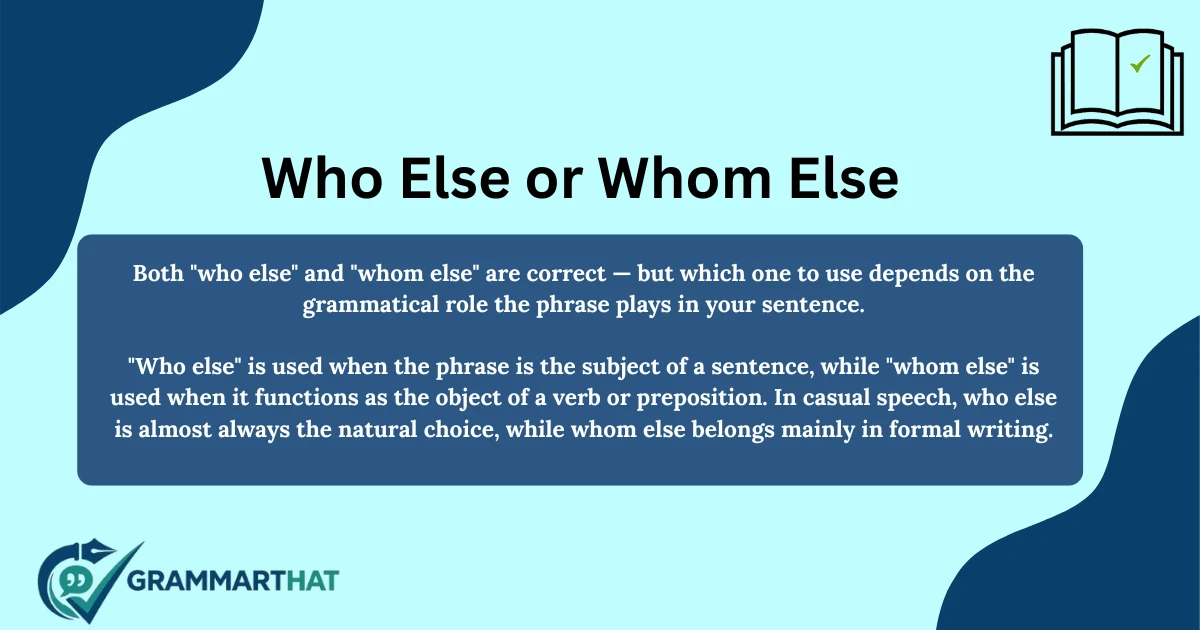
Both “who else” and “whom else” are correct — but which one to use depends on the grammatical role the ...
Read moreSome of Whom or Some of Who: Which Is Correct? 2026
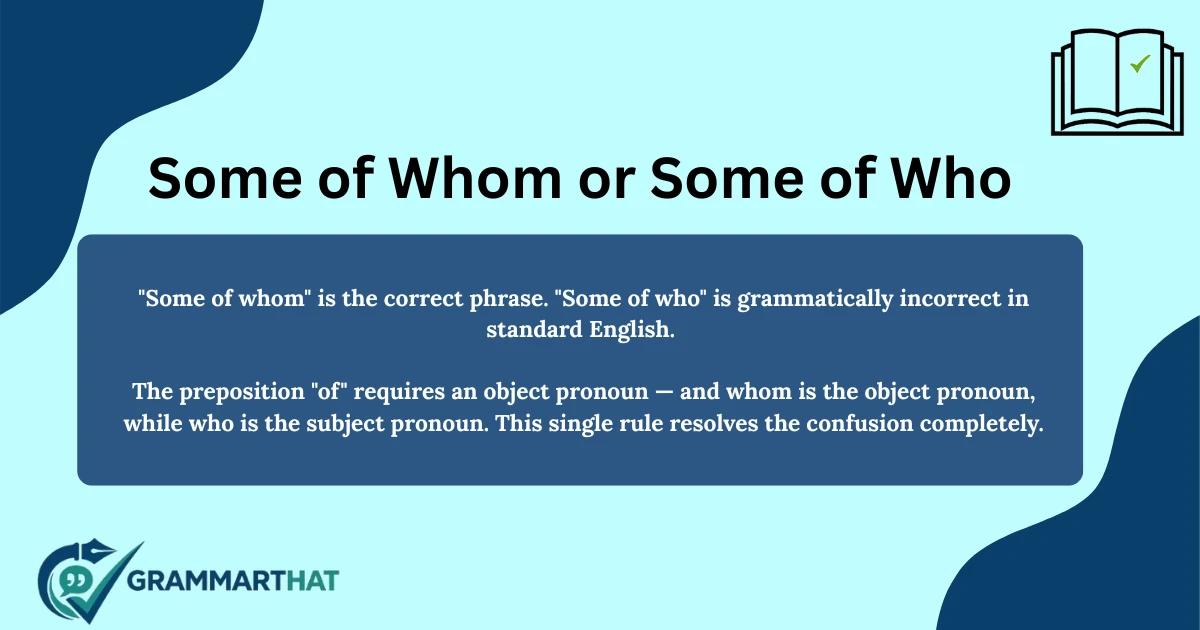
“Some of whom” is the correct phrase. “Some of who” is grammatically incorrect in standard English. The preposition “of” requires ...
Read more