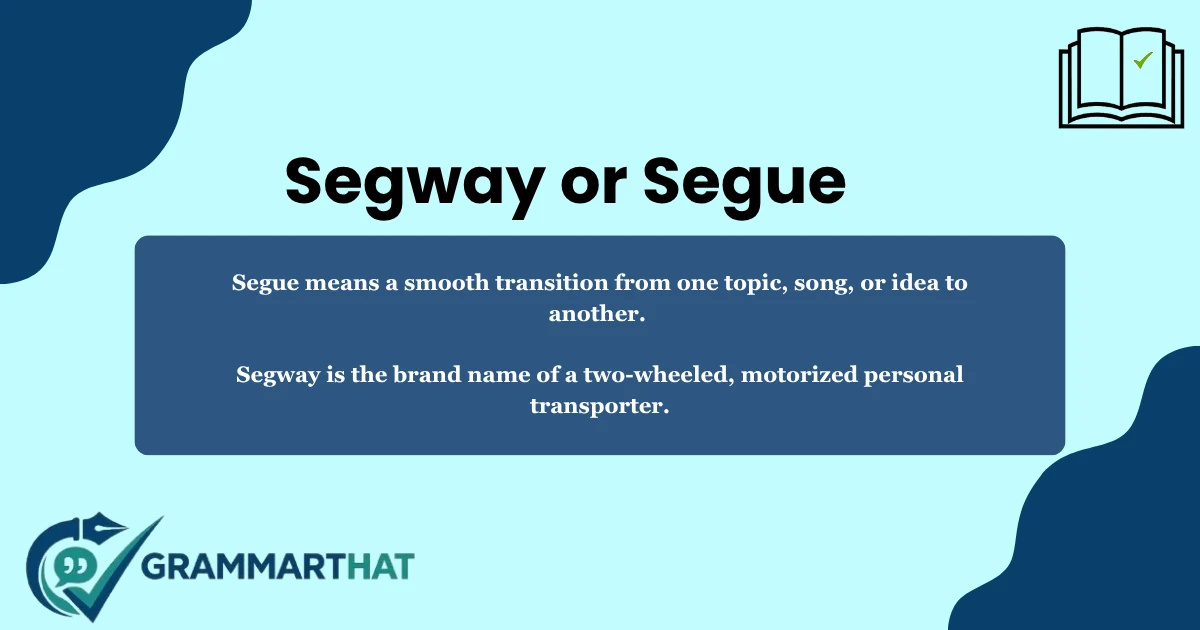
“Segue” is the word you need when you want to describe a smooth, uninterrupted transition from one topic, song, or idea to another.
“Segway” is the proper brand name for a two-wheeled, motorized personal balancing vehicle. Even though they sound identical, they serve completely different purposes in writing.
This guide breaks down exactly when to use each word.
What Does “Segue” Mean?

Segue describes a smooth shift from one activity, subject, or musical track to the next without a pause. It comes from an Italian musical term meaning “it follows.”
Example: “The speaker made a clever segue from the economy to local weather.”
Common uses of “segue” in everyday writing:
- “She used a smooth segue between topics during the interview.”
- “That was a great segue into the next agenda item.”
- “The DJ’s segue between songs was seamless.”
“Segue” in Different Writing Contexts
What Does “Segway” Mean?

Segway is a trademarked name for an electric, self-balancing personal transporter. It’s always capitalized as a proper noun.
Example: “The tour guide rode a Segway down the crowded sidewalk.”
Common uses of “Segway” in everyday writing:
- “Tourists rented a Segway to explore downtown.”
- “The mall banned Segway rides on weekends.”
- “He fell off his Segway trying to turn too fast.”
“Segway” in Different Writing Contexts
Why People Mix Them Up
The two words sound exactly alike, which is why searches for “segway in conversation” and “segway transition” are common — even though the correct spelling in both cases is segue.
Segway should only ever refer to the physical, trademarked vehicle. Any time you’re describing a shift between topics — a segway between topics, so to speak — the correct word is always segue.
Synonyms, Antonyms & Related Phrases
Synonyms for segue: transition, shift, bridge, changeover, pivot.
Antonyms for segue: interruption, abrupt stop, disconnect, jump cut.
Related phrases: “smooth segue” (a natural, well-executed transition), “segue into” (to move directly into a new topic), “Segway tour” (a guided tour using the branded vehicle).
Memory Tip
The easiest way to remember which word to trust:
Segue — think “sequence.” Both relate to one thing following another, matching the word’s Italian root meaning “it follows.”
Segway — think “way to travel.” The brand name literally contains “way,” pointing to its function as a mode of transportation.
Frequently Asked Questions
What does segue mean?
Segue means a smooth, uninterrupted transition from one topic, song, or idea to another.
Does Segway mean transition?
No. Segway refers only to the branded, self-balancing personal transporter. The word for transition is segue.
How do you use segue?
Use segue as a noun or verb to describe moving smoothly from one topic to the next, such as “That was a perfect segue” or “Let’s segue into the next point.”
What is a segue in conversation?
A segue in conversation is a natural, smooth shift from one subject to another without an awkward pause or abrupt change.
Is it segue or Segway?
For describing a transition, it’s always segue. Segway is reserved for the branded personal transporter vehicle.
How do I use segue in a sentence?
“He made a smooth segue from his opening joke into the main presentation.”
What is meant by Segway?
Segway refers to a two-wheeled, motorized, self-balancing personal transportation device, sold under that trademarked name.
What is a synonym for “segue”?
Common alternatives include transition, shift, pivot, and bridge.
How do Americans pronounce segue?
Americans pronounce segue as “SEG-way” — which is exactly why it’s so often confused with the vehicle brand name.
What does “segue” mean in English?
In English, segue describes a smooth, connected shift from one idea, topic, or piece of music to another.
How to use Segway in a sentence?
“They toured the city center on a rented Segway.”
What does “good segue” mean?
A “good segue” describes a transition that feels natural and well-timed, connecting two topics without feeling forced or abrupt.
Conclusion
Segue and Segway sound identical but mean completely different things. Use segue for smooth transitions between topics, songs, or ideas, and reserve Segway for the branded personal transporter. Getting this right avoids one of the most common word mix-ups in everyday writing.

Hi, I’m the voice behind GrammarThat.com. I make grammar simple and easy to understand, from basic rules to advanced writing tips. Clear explanations. Practical examples. No confusion.