Extensible and extendible look almost identical — but they are used in very different situations.
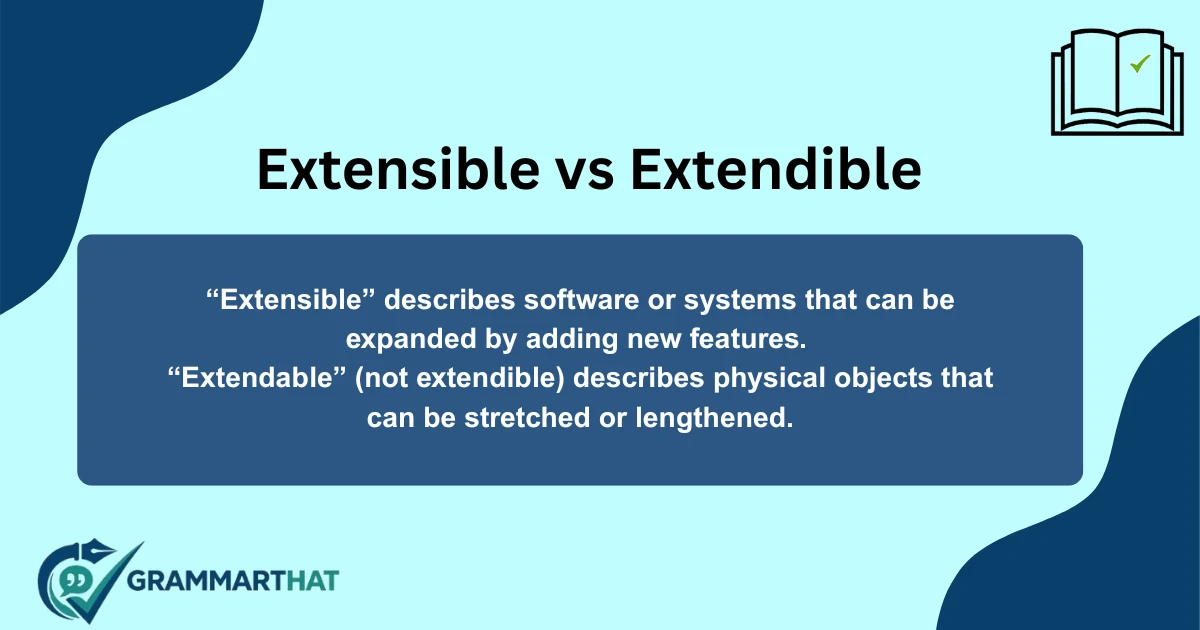
Extensible describes software or systems that can be expanded by adding new features. Extendable (not extendible) describes physical objects that can be stretched or lengthened.
This guide breaks down the difference between extensible and extendible, clears up the spelling confusion, and shows you exactly when to use each term.
What Does Extensible Mean?

Extensible is a technical adjective used primarily in software development and system architecture. It describes a platform, framework, or system that can be enhanced by adding external components — such as plugins, modules, APIs, or extensions.
It comes from the Latin extendere, meaning “to stretch out.” In modern usage, it almost exclusively lives in the world of technology and programming.
Example: “WordPress is an extensible platform with thousands of available plugins.”
Common uses:
- Software frameworks and programming languages
- Web platforms and content management systems
- Cloud computing and API design
- Modular architecture in tech products
Real-World Extensible Examples
What Does Extendible Mean?

Here is where the confusion begins. Extendible is widely considered an outdated or incorrect spelling. The correct word for physical objects is extendable — not extendible.
Extendable describes physical objects that can be made longer, stretched, or unfolded through their own built-in design. No external additions are needed — the object does the expanding itself.
Example: “We bought an extendable dining table for the holidays.”
Common uses:
- Furniture with fold-out sections
- Tools with telescoping handles
- Ladders and poles that lengthen
- Outdoor and travel gear
Real-World Extendable Examples
The Key Difference Between Extensible vs Extendible

Context Is Everything
The core distinction comes down to what is being expanded and how it expands.
Extensible = abstract, digital, software-based expansion through external additions Extendable = physical, tangible expansion through built-in mechanisms
Think of it this way:
- A WordPress site is extensible — you add a plugin to give it new power
- A dining table is extendable — you pull out its hidden leaf to make it longer
One needs something added from outside. The other expands from within.
Side-by-Side Comparison
What About “Extendible”?
Extendible technically exists in older dictionaries — but most modern style guides and professional writers consider it outdated. In practice, it creates confusion and looks like a spelling error.
The safe rule: avoid extendible entirely. Use extendable for physical objects and extensible for software and systems.
When to Use Extensible vs Extendable
Use “Extensible” When:
- Describing software architecture or frameworks
- Talking about APIs, plugins, or modules
- Writing technical documentation or developer guides
- Discussing cloud platforms and digital tools
Examples:
- “The new framework provides an extensible architecture for third-party integrations.”
- “Our system is fully extensible — developers can add custom features without touching the core code.”
Use “Extendable” When:
- Describing a physical product that can be lengthened
- Writing product descriptions or user manuals
- Referring to furniture, tools, or outdoor equipment
- Discussing anything that stretches or expands physically
Examples:
- “The extendable ladder reaches up to 20 feet.”
- “This extendable hose doubles in length when water flows through it.”
Common Mistakes to Avoid
Memory trick: Extensible needs external additions — both start with “ex.” Extendable has a built-in ability — it extends on its own.
FAQs — Extensible vs Extendible
What is the difference between extensible and extendible?
Extensible refers to software or systems that can be expanded through external additions like plugins or modules. Extendible is an outdated spelling — the correct word for physical objects that can be lengthened is extendable.
What does extendible mean?
Extendible is an older, largely outdated form of extendable. It means capable of being extended or lengthened. In modern writing, extendable is the preferred and correct spelling for physical objects.
What’s the difference between extensible and inextensible?
Extensible means a system or object can be expanded or stretched. Inextensible means it cannot — it is fixed and cannot be lengthened or expanded. The prefix in- reverses the meaning entirely.
What does extensible mean?
Extensible means a system, platform, or software can be enhanced by adding new components from outside — such as plugins, APIs, or modules — without changing its core structure.
What is a synonym for extendible?
Synonyms for extendable include: adjustable, expandable, telescoping, retractable, and stretchable. For extensible in tech contexts: modular, scalable, pluggable, and customizable.
What is extensible vs non extensible?
An extensible system accepts new features, modules, or plugins without rebuilding the core. A non-extensible system is closed and rigid — it cannot accept additions or modifications from outside its original design.
Conclusion
The rule is simple once you see it clearly. Use extensible when you are talking about software, platforms, or digital systems that grow by adding external components. Use extendable when you are describing a physical object that can be made longer or larger through its own design.
As for extendible — skip it entirely. It is outdated, widely considered incorrect, and creates unnecessary confusion in both technical and general writing. Stick with extensible for tech and extendable for everything physical, and your writing will always be precise and professional.

Hi, I’m the voice behind GrammarThat.com. I make grammar simple and easy to understand, from basic rules to advanced writing tips. Clear explanations. Practical examples. No confusion.