You Are Always Welcomed vs Welcome: Which Is Correct? 2026
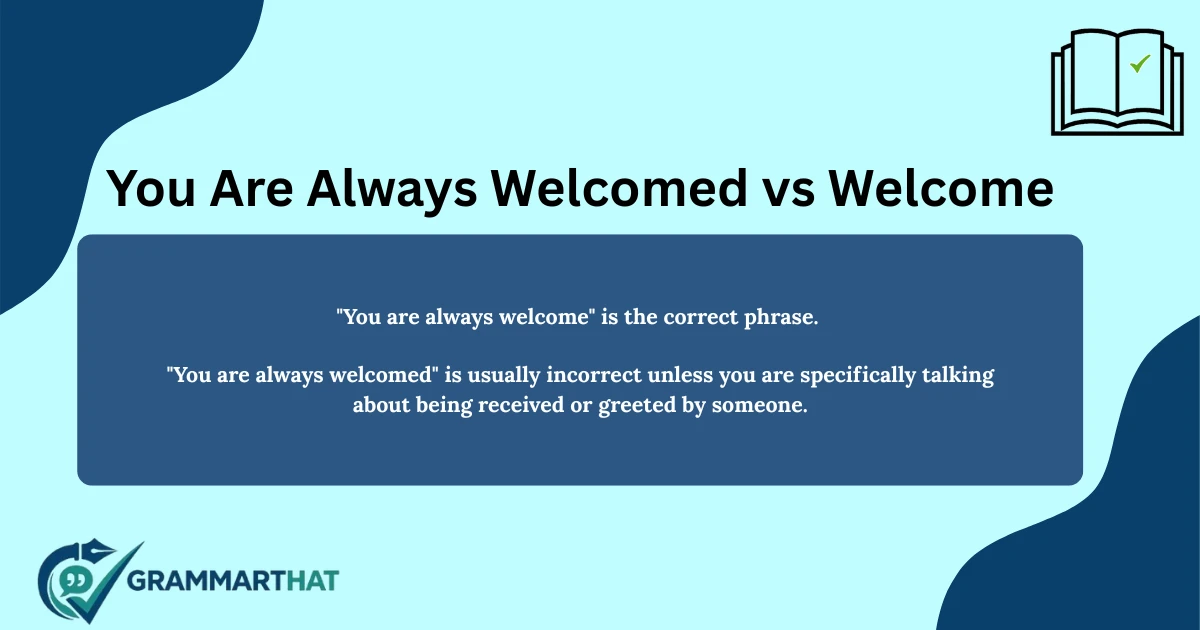
“You are always welcome” is the correct phrase. “You are always welcomed” is usually incorrect unless you are specifically talking ...
Read moreOne or More Is or One or More Are: Which Verb Is Correct? 2026
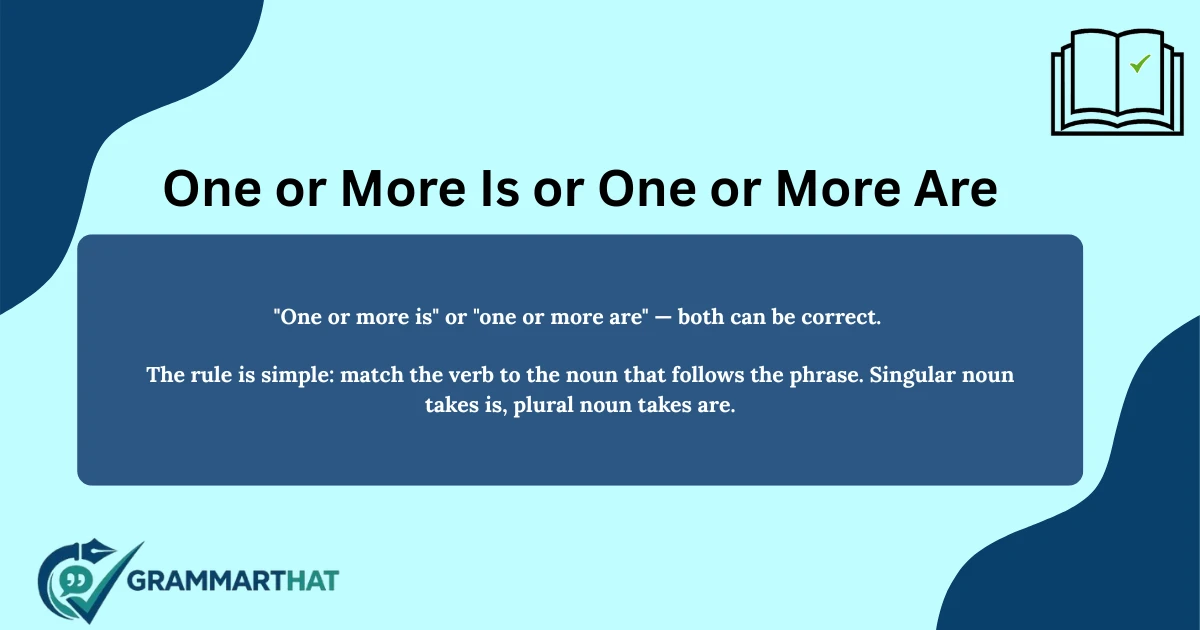
“One or more is” and “one or more are” can both be correct. The choice depends on the noun that ...
Read moreIn the Store or At the Store: Which One Is Correct? 2026
Both “in the store” and “at the store” are grammatically correct. The difference is about precision rather than correctness. “At ...
Read moreMoose vs Mousse: What Is the Difference? 2026
Moose and mousse are homophones — they sound exactly the same but have completely different meanings and spellings. Moose is ...
Read moreWhole Day or All Day: Which Is Correct? 2026
Both “all day” and “whole day” are correct in English — but they do not mean exactly the same thing. ...
Read morePrescribe vs Proscribe: Meaning, Difference, and Usage 2026
Prescribe and proscribe differ by a single letter — but that letter changes the meaning completely. Prescribe means to recommend, ...
Read moreSeparate vs Seperate: Which Is Correct? 2026
Separate is the only correct spelling. Seperate — with an e in the middle instead of an a — is ...
Read moreSpatter vs Splatter: Meaning, Difference, and Correct Usage 2026
Spatter and splatter both describe liquid or substance scattering — but they describe it on different scales. Spatter refers to ...
Read moreElegy vs Eulogy: Meaning, Difference, and Correct Usage 2026
Elegy and eulogy both relate to honoring loss — but they are entirely different in form, purpose, and setting. An ...
Read moreDo Not vs Don’t: Meaning, Difference, and Correct Usage 2026
“Do not” and “don’t” mean exactly the same thing — but they carry different tones and belong in different contexts. ...
Read more