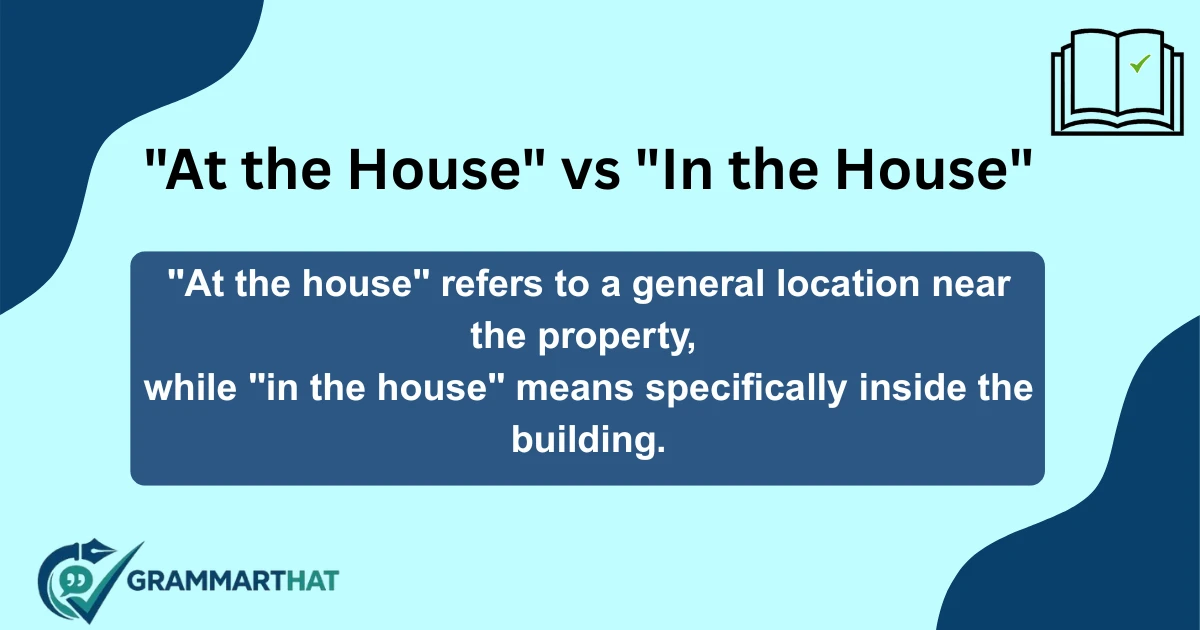
Both “at the house” and “in the house” are grammatically correct — but they mean different things.
“At the house” refers to a general location near the property, while “in the house” means specifically inside the building.
Picking the wrong one makes your sentence unclear. This guide explains the difference, shows real examples, and helps you use each phrase correctly every time.
What Does “At the House” Mean?
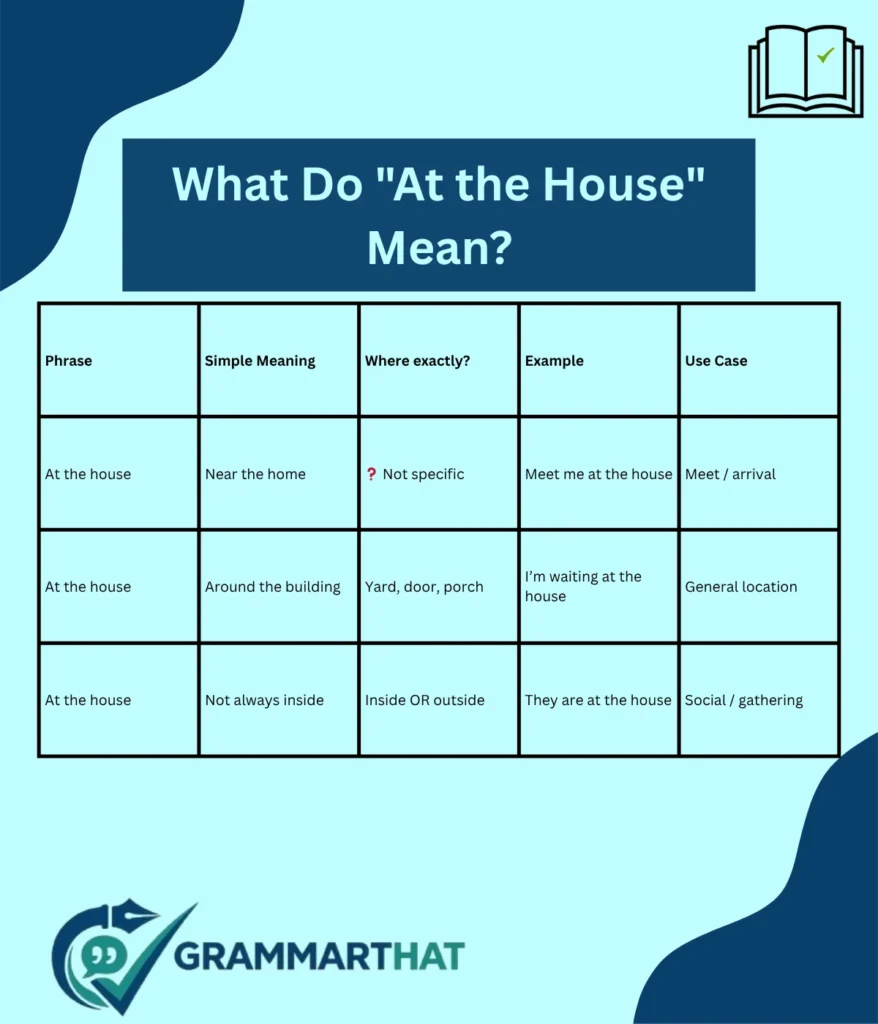
At the House — Meaning and Usage
“At the house” is a broad location phrase. It means someone or something is near the property — but not necessarily inside it.
It covers the driveway, front door, backyard, porch, or anywhere around the building. The exact spot does not matter when you use this phrase.
Example: “I’ll meet you at the house around 6 PM.”
This sentence does not tell you whether the person is inside, outside, or at the front door — and that is perfectly fine here.
Common uses:
- Arranging meetups or arrivals
- Giving general directions
- Describing social gatherings
What Does “In the House” Mean?
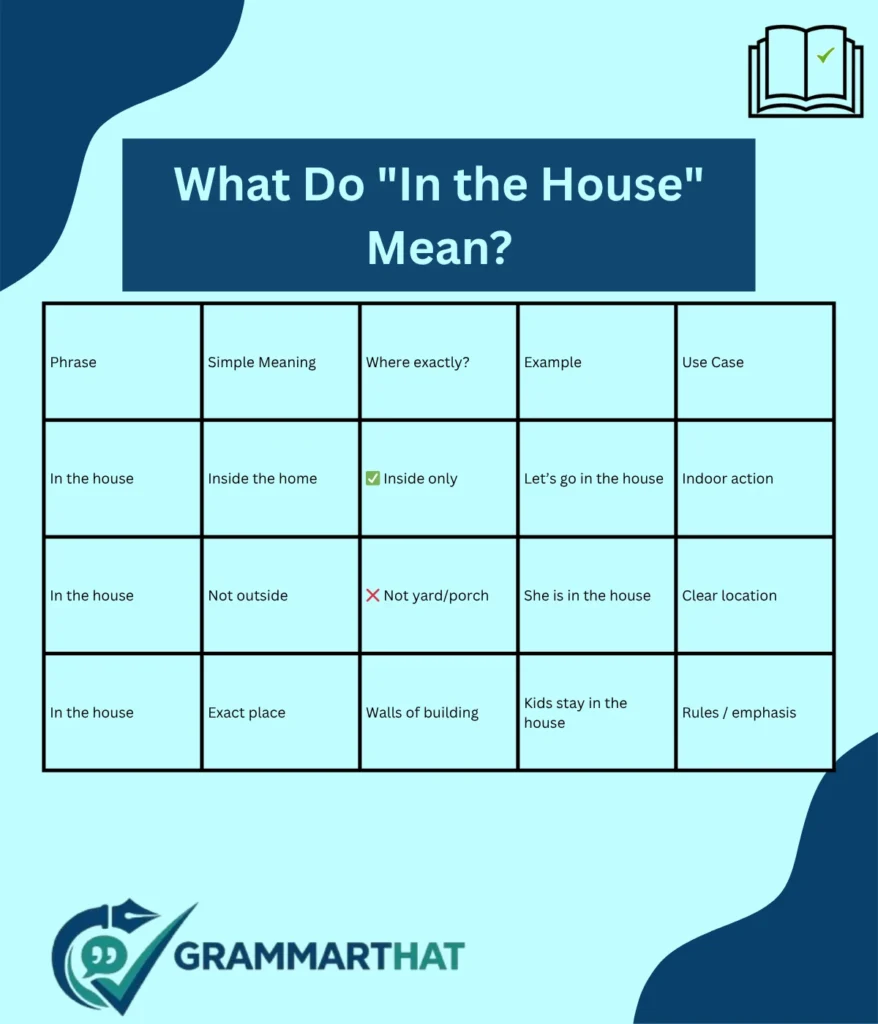
In the House — Meaning and Usage
“In the house” is a specific location phrase. It means someone or something is physically inside the walls of the building — nowhere else.
If a person is on the porch or in the yard, you would not say they are in the house. This phrase draws a clear line between indoors and outdoors.
Example: “It’s too cold outside — let’s go in the house.”
Here the meaning is precise. Inside the building. Not nearby. Not on the porch. Inside.
Common uses:
- Contrasting indoor vs outdoor activity
- Describing rules that apply indoors
- Emphasizing someone is inside
Quick Comparison Table
| Phrase | Meaning | Best Used For |
|---|---|---|
| At the house | General location near the property | Meetups, arrivals, gatherings |
| In the house | Specifically inside the building | Indoor activities, indoor rules |
| At home | At one’s place of residence | General residence reference |
The Key Difference Between “At the House” vs “In the House”
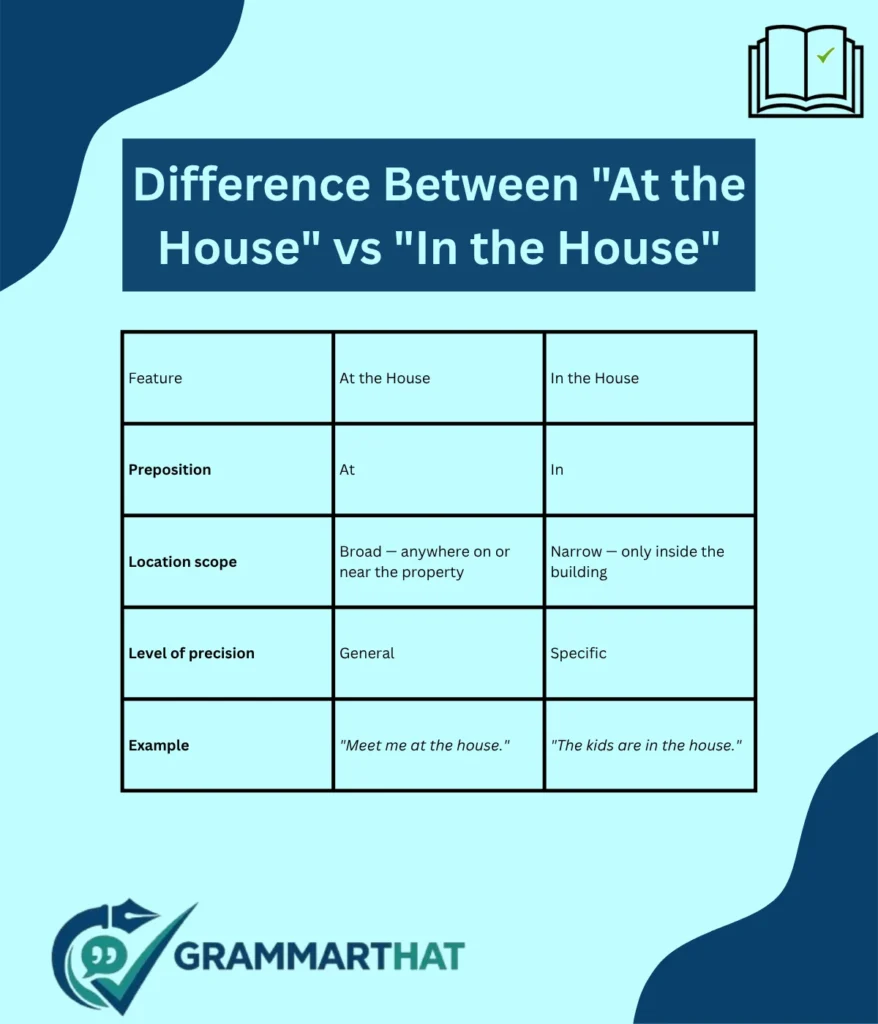
It All Comes Down to the Preposition
The entire difference lives in one word — the preposition.
“At” is broad. It points to a general area or location without being specific. “In” is precise. It places something physically inside an enclosed space.
This is why preposition choice changes the entire meaning of the sentence.
| Feature | At the House | In the House |
|---|---|---|
| Preposition | At | In |
| Location scope | Broad — anywhere on or near the property | Narrow — only inside the building |
| Level of precision | General | Specific |
| Example | “Meet me at the house.” | “The kids are in the house.” |
The “At Home” Connection
“At home” is the most common idiom for being at one’s residence. It does not specify inside or outside — it simply means you are at the place where you live.
- “I’m at home today.” — You’re at your residence (could be inside or outside)
- “I’m in the house.” — You are specifically inside the building
- “Meet me at the house.” — Come to the general location of this property
All three are correct — but each carries a different level of spatial precision.
When to Use “At the House” vs “In the House”
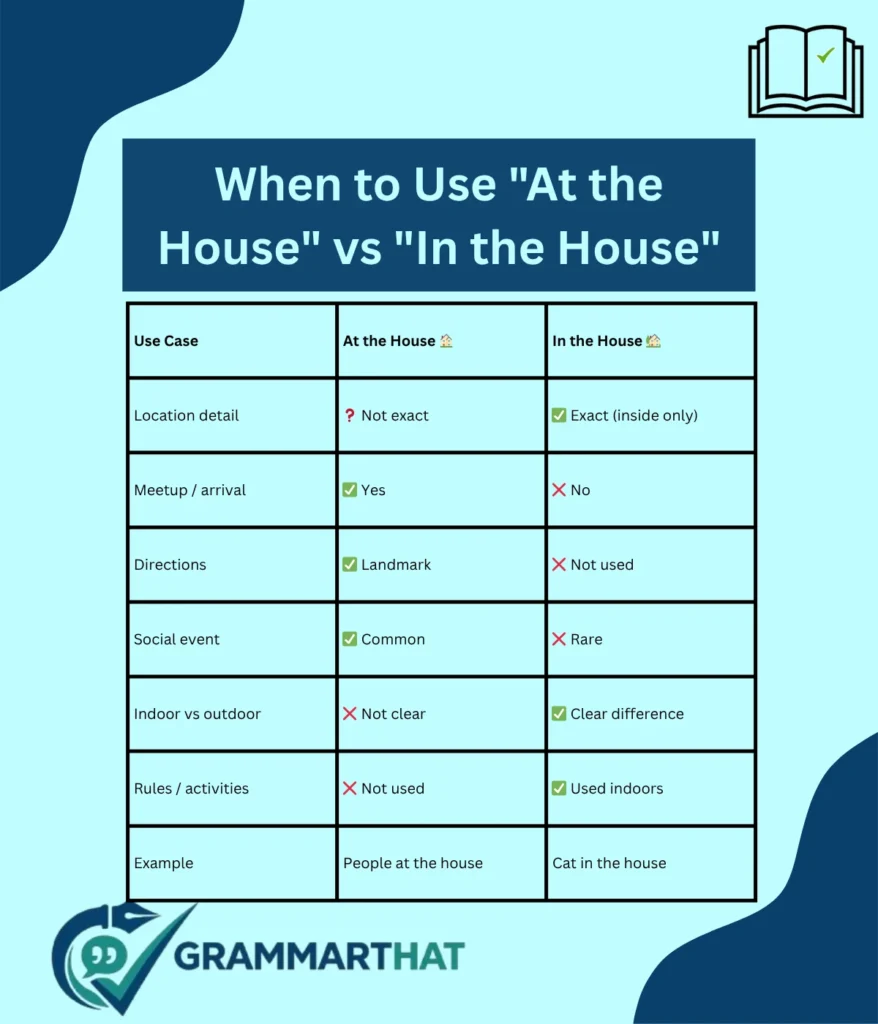
Use “At the House” When:
- Location does not need to be exact
- You are talking about arrivals or meetups
- You are giving directions using the house as a landmark
- You are referring to a social gathering or event
Correct usage examples:
- “There were many people at the house last night.”
- “The delivery was left at the house.”
Use “In the House” When:
- You want to contrast indoors with outdoors
- You are describing indoor rules or activities
- The exact indoor location matters
- You are emphasizing something is inside the building
Correct usage examples:
- “The cat is in the house — not in the yard.”
- “No smoking is allowed in the house.”
Common Mistakes to Avoid
| Wrong ❌ | Correct ✅ |
|---|---|
| “Everyone was in the house for the party.” (if guests were also outside) | “Everyone was at the house for the party.” |
| “Meet me in the house at 6 PM.” (if exact indoor location not needed) | “Meet me at the house at 6 PM.” |
| “The dog is at the house.” (if you mean strictly inside) | “The dog is in the house.” |
FAQs — “At the House” vs “In the House”
Do you say “in the house” or “at the house”?
Both are correct but mean different things. Use “in the house” when you mean strictly inside the building. Use “at the house” when referring to a general location near the property.
Which is correct, at house or in house?
Neither is standard on its own — you need the article. The correct forms are “at the house” and “in the house.” Both are grammatically correct with different meanings.
Are you at the house or in the house?
Use “at the house” if you are anywhere on or near the property. Use “in the house” only if you are physically inside the building.
What is meant by “in the house”?
“In the house” means you are physically inside the building — within its four walls. It excludes any outdoor spaces like the yard, porch, or driveway.
Can “in the house” ever mean “at home”?
Yes, in casual conversation “in the house” can loosely mean “at home.” However, “at home” is the more natural and common phrase for that meaning. “In the house” is better used when emphasizing you are physically inside the building.
Is “at the house” formal or casual?
“At the house” is casual and conversational. It works perfectly in everyday speech and informal writing. For formal writing, more precise phrases like “at the residence” or “on the premises” are more appropriate.
Conclusion
The difference between “at the house” and “in the house” comes down to one thing — how specific you need to be. Use “at the house” when location does not need to be exact. Use “in the house” when you mean strictly inside the building.
Both phrases are correct, but using the wrong one can confuse your meaning. Now that you know the difference, you can choose the right phrase every time — and communicate with complete clarity.

Hi, I’m the voice behind GrammarThat.com. I make grammar simple and easy to understand, from basic rules to advanced writing tips. Clear explanations. Practical examples. No confusion.